

A Bar Simulator Revenue Example That Adds Up

A bar simulator revenue example should start with the busiest hour of your week, not the equipment price. If guests are already waiting for a table on Friday night, a well-placed golf simulator can give them a reason to arrive earlier, stay longer, and order another round. If traffic is inconsistent, the same simulator needs a stronger plan for leagues, events, and off-peak bookings.
For bars and restaurants, a simulator is more than an attraction. It can be a bookable revenue center, a group-event driver, and a practical way to make underused square footage work harder. The numbers below are illustrative, but they show how operators can model revenue before selecting technology, enclosure style, and room layout.
A Bar Simulator Revenue Example With Realistic Assumptions
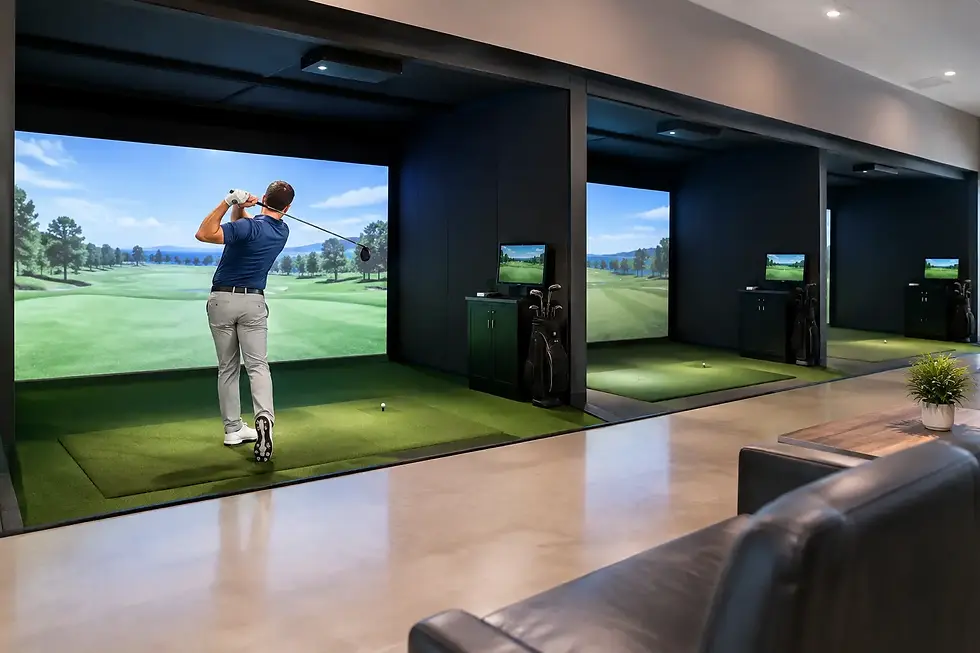
Consider a neighborhood sports bar with one premium simulator bay. The bay is installed in a dedicated area with comfortable seating, a screen visible from nearby tables, and enough clearance for right- and left-handed golfers. The bar charges by the hour and allows online reservations during peak periods.
For this example, assume these operating conditions:
| Metric | Example assumption | | --- | ---: | | Average hourly bay rate | $55 | | Available hours per week | 84 | | Average booked hours per week | 32 | | Direct simulator revenue per week | $1,760 | | Direct simulator revenue per month | $7,627 | | Direct simulator revenue per year | $91,520 |
The math is simple: 32 booked hours multiplied by a $55 average hourly rate equals $1,760 per week. Multiplied across 52 weeks, that produces $91,520 in annual bay rental revenue before operating costs.
The key word is average. A bar might charge $40 per hour during a quiet Tuesday afternoon, $55 during standard evening hours, and $70 to $85 on Friday and Saturday nights. A blended average of $55 is often more useful for planning than assuming every slot sells at a premium rate.
The Revenue Most Projections Miss: Food and Beverage
Direct bay rental is only part of the opportunity. Golf simulator groups tend to stay together, and they often book for 90 minutes to two hours. That creates additional food and beverage spend that may not have occurred otherwise.
Suppose the average simulator booking brings four guests. If those guests spend an additional $18 each on drinks and food while using the bay, that is $72 in incremental sales per booked hour. At 32 booked hours per week, the simulator supports another $2,304 per week in food and beverage sales.
Not all of that amount is pure incremental revenue. Some guests may have visited the bar anyway, and food and beverage carry their own cost of goods. Still, the simulator can change the quality of the visit. A group that might have stayed for one drink may reserve a two-hour experience, order appetizers, and return for league night the next week.
Using a conservative approach, an operator might count only half of that added spend as truly incremental. That still equals approximately $59,900 in annual incremental food and beverage revenue, based on $1,152 per week.
Combined with direct bay rentals, this example produces about $151,420 in annual gross revenue influence. The exact mix will vary by location, menu, daypart, and local competition, but it explains why commercial simulator planning should not focus on hourly rental alone.
What Happens When You Add Leagues and Events?
The strongest bar simulator programs usually do not rely only on walk-in bookings. They create recurring reasons to visit. A weekly league, corporate outing package, birthday event, or winter golf series can turn open hours into scheduled revenue.
For example, reserve one slower night each week for a 12-player league. If each player pays $25 for a two-hour session, the bar earns $300 in direct league fees. Add modest food and beverage spend, and the night can become more valuable than leaving the bay available for uncertain walk-ins.
Private events can be even more useful. A two-hour package priced at $450 to $750, depending on the market and inclusions, gives groups a clear reason to choose your venue for a client outing or team social. The best package price depends on whether food, beverage credits, a host, or multiple bays are included.
There is a trade-off. Selling the bay too cheaply may fill the schedule without producing enough margin. Pricing it too high can make the experience feel inaccessible during slower periods. A flexible rate structure usually works better than one flat number all week.
Occupancy Matters More Than the Headline Rate
A $75 hourly rate sounds attractive, but it does not help if the bay sits empty most weekdays. Conversely, a $45 rate with consistent bookings, league play, and food and beverage sales may produce better overall results.
Here is how annual direct rental revenue changes at different booking levels, using the same $55 average rate:
| Average booked hours per week | Annual direct bay revenue | | --- | ---: | | 20 hours | $57,200 | | 32 hours | $91,520 | | 45 hours | $128,700 | | 60 hours | $171,600 |
For a new installation, it is prudent to underwrite the project at a conservative occupancy level. Build the business case around 20 to 32 booked hours each week rather than assuming prime-time demand immediately fills every slot. If the location has established golf demand, a loyal customer base, and a strong booking process, upside can be meaningful.
Costs to Include in a Commercial Simulator Model
Revenue projections are more credible when they include the full operating picture. The simulator itself has a capital cost, but the room and program also need attention.
Commercial operators should account for software subscriptions, equipment service plans, electricity, cleaning, occasional impact-screen replacement, booking platform fees, insurance considerations, and staff time. If the bay is in a high-volume environment, durable flooring, quality turf, appropriate lighting, and protected equipment placement can reduce disruptions over time.
Marketing deserves a line item as well. A new simulator does not automatically create demand. Launch offers, league promotion, local business outreach, social content, and in-venue signage all help establish the bay as part of the bar's identity. The objective is not to discount forever. It is to give customers a reason to try the experience and a reason to book again.
It is also wise to consider opportunity cost. A simulator bay occupies space that could otherwise hold tables, games, or private dining. That does not make it a poor use of space. It means the design needs to support the venue's actual traffic pattern. In some bars, a simulator near the action drives curiosity and adds energy. In others, a semi-private room is better for paid bookings and corporate groups.
Design Choices That Protect Revenue
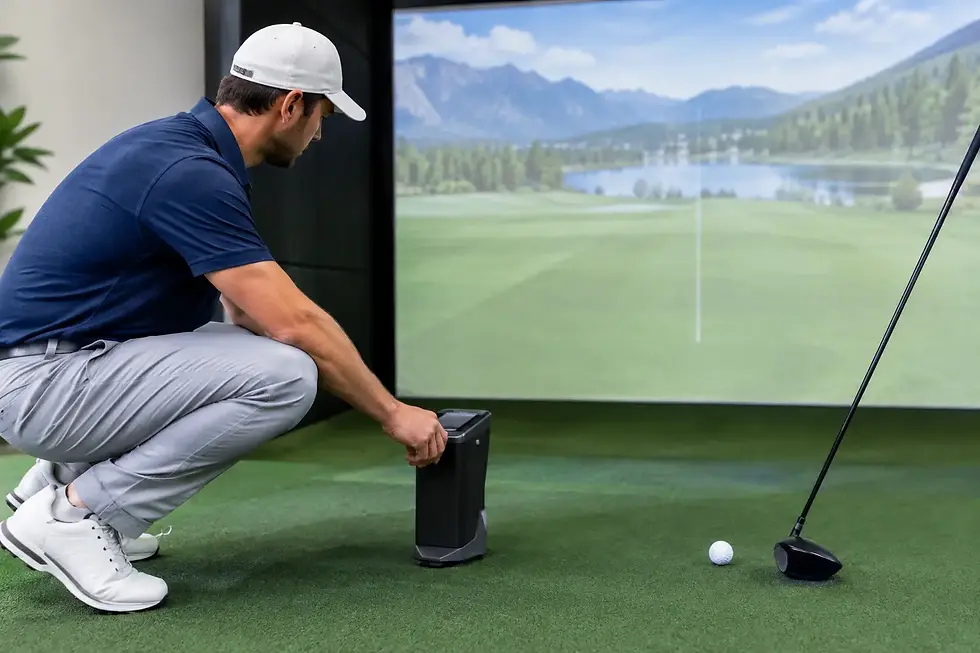
A commercial golf simulator should be selected for repeat use, not just an impressive first impression. Launch monitor accuracy matters for serious golfers, but reliability, swing space, screen durability, image quality, and easy operation matter just as much in a bar setting.
The room should be designed around the customer experience. Guests need enough space to swing comfortably, seating for their group, convenient food and beverage service, and a clear view of the action. Staff need a setup that is simple to start, reset, and monitor when the bar is busy.
Premium systems from established simulator brands can support a higher-quality experience, but the right choice depends on your business model. A golf-focused venue may prioritize detailed data and course realism. A neighborhood bar may place more weight on multiplayer games, simple controls, and fast turnover. The best solution is the one that matches your customers, room dimensions, and revenue plan.
Turning the Model Into a Real Decision
Before committing to a build, map your likely demand by day and hour. Identify the nights when leagues could run, the times when corporate events are realistic, and the price your local market will support. Then compare that plan with the required space, installation scope, equipment selection, and expected operating costs.
A custom commercial design helps prevent expensive compromises, such as a bay that is difficult for left-handed players, a projector affected by ambient light, or a screen positioned too close for safe swings. Green Pro Golf Simulators helps operators align those technical decisions with the way the venue intends to earn revenue.
The most useful projection is not the biggest one on paper. It is the model your team can execute every week: fair pricing, reliable equipment, a room guests want to reserve, and a calendar that gives them a reason to come back.

Comments