

A Private Club Simulator Example That Drives Play

A private club simulator example is most useful when it answers the question every club leader eventually asks: will this become a true member amenity, or an expensive room that gets used only when the weather is bad? The difference comes down to thoughtful planning. The right indoor golf space can support practice, instruction, leagues, events, junior programming, and food-and-beverage traffic well beyond the traditional golf season.
Consider a member-owned club in the Upper Midwest with a strong summer golf calendar, a quieter shoulder season, and a clubhouse lounge that sees uneven traffic after October. The club has an underused 18-by-28-foot room near its grille, plus a nearby storage area that can support equipment and maintenance. Its board wants a premium simulator experience that feels consistent with the club’s reputation, not a basic entertainment setup placed in a spare room.
The Private Club Simulator Example: From Spare Room to Member Asset
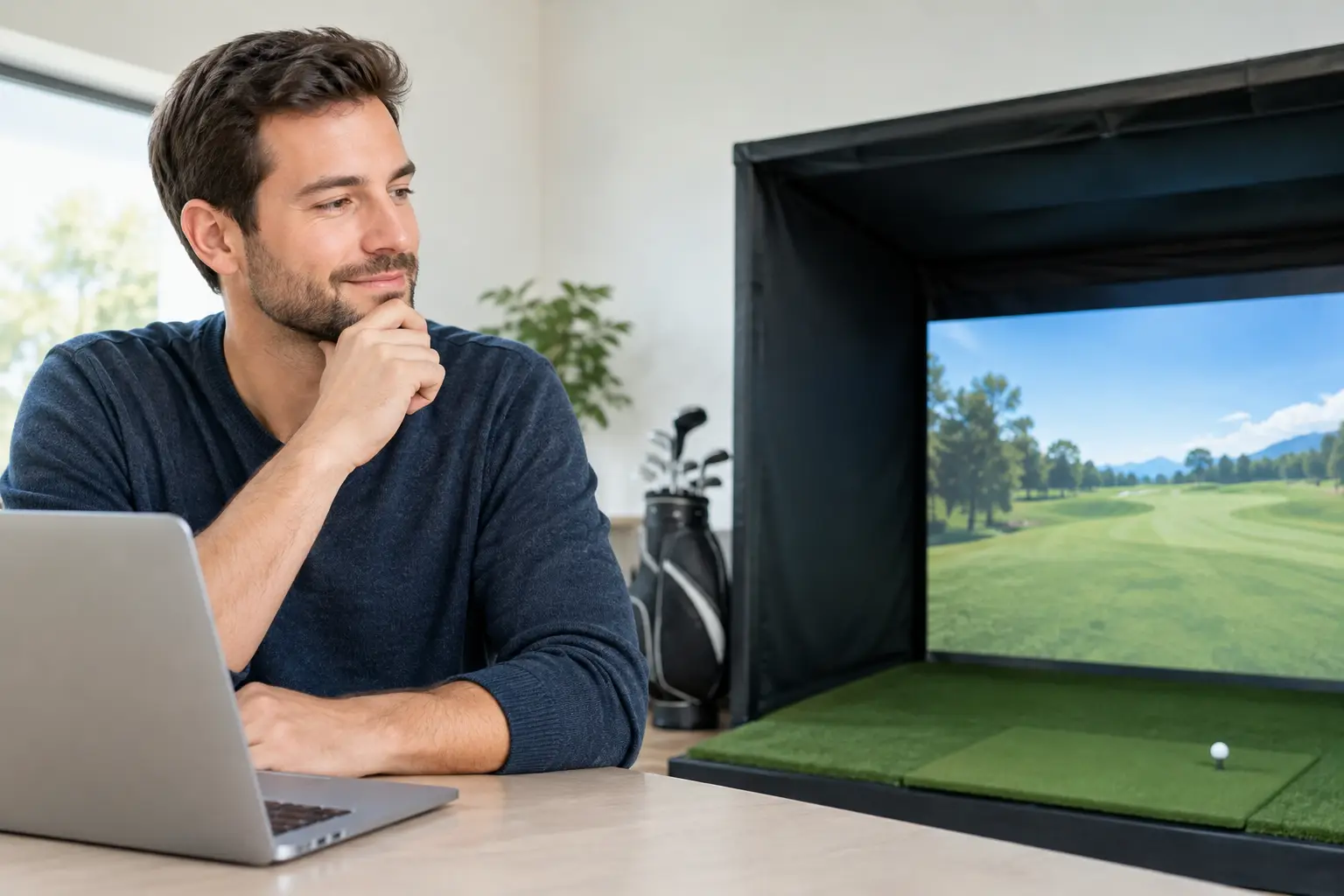
In this scenario, the club installs one full-size simulator bay with a premium launch monitor, high-resolution projector, impact screen, commercial-grade hitting mat, turf flooring, enclosure, and a dedicated computer. The room is designed to accommodate both right- and left-handed golfers without constant adjustments. Sound treatment helps contain impact noise, while controlled lighting keeps projected images bright and clear.
That physical design matters as much as the launch monitor. Members may forgive a long winter, but they will not return often to a simulator room that feels cramped, dim, or unfinished. A well-built space should feel like an extension of the club, with clean sightlines, durable finishes, comfortable seating, and enough room for an instructor, a player, and a few guests.
The club selects technology based on its priorities. If detailed club and ball data are central to the teaching program, the launch monitor needs reliable measurement and software that supports productive coaching sessions. If course play and group events will drive the schedule, realistic graphics, stable software performance, and an intuitive player experience become equally important. Premium systems from brands such as Trackman, Uneekor, Foresight, and ProTeeVX can fit different club goals, but the best choice depends on the room, the programming plan, and how the space will be managed.
What the Club Wants to Accomplish
The board does not buy the simulator because the technology is interesting. It invests because the simulator supports several measurable outcomes.
First, it gives members a place to maintain their games all year. Winter practice no longer means hitting into a net with limited feedback. Members can work on carry distances, face control, club delivery, gapping, and short-game shots with useful data. For golfers preparing for a spring golf trip, a member-guest event, or a competitive season, that access has real value.
Second, it expands the professional staff’s teaching capacity. A PGA professional can use the room for individual lessons, club fitting, junior instruction, and structured winter coaching programs. Video and launch data make instruction more specific, while indoor access reduces cancellations caused by weather or early darkness.
Third, it creates a reason to visit the club outside of peak tee-time hours. Couples nights, nine-hole simulator leagues, corporate outings, member tournaments, and golf-and-dinner packages can all use the space. A simulator does not replace the outdoor course. It keeps the club connected to golf when the course is closed, saturated, cold, or simply not the preferred option.
A Practical Operating Model
For this example, the club reserves weekday mornings for instruction and fitting. Afternoons are available for member practice by reservation, with a modest hourly fee that helps cover software, maintenance, and staffing. Evenings are used for winter leagues and social events, often paired with food-and-beverage service from the grille.
A club can choose to make simulator access complimentary, but paid reservations often create better availability and protect the experience. The fee does not need to be high. Its purpose may be to manage demand, reinforce the premium nature of the amenity, and offset operating costs. The right approach depends on membership demographics, existing dues structure, and whether the club wants the simulator to function as a profit center or a retention-focused amenity.
The strongest programming usually combines both. Members appreciate open practice access, while organized leagues and lessons produce predictable revenue. A well-run winter league can fill traditionally slow evenings and bring players to the bar or dining room. A junior development package can strengthen family participation. A corporate event can introduce prospective members to the club in a setting that feels active and welcoming.
Design Details That Protect the Investment
Not every available room is ready for a simulator. Ceiling height is often the first question, particularly for players who make a full driver swing. Width and depth are equally important, especially when a club wants to serve left-handed and right-handed players comfortably. A room can technically fit a simulator but still deliver a compromised experience if the golfer feels restricted or unsafe.
Before equipment is selected, the project should account for room dimensions, framing, electrical capacity, projector placement, HVAC, Wi-Fi or hardwired internet, lighting, and flooring. Commercial use also raises practical questions around traffic flow, supervision, cleaning, equipment access, and durability. A residential-style build may not hold up to a busy member schedule.
The club in this example avoids a common mistake: purchasing the launch monitor first and forcing the room to work around it. Instead, the design starts with the playing position, ball flight area, screen location, and safe clearance. The technology is then matched to the space. This approach produces a better visual result and prevents expensive changes after installation.
A second worthwhile decision is to include a quality display and computer from the start. Simulator software is demanding, and poor image quality can make even excellent ball data feel underwhelming. A commercial-ready projector, reliable gaming computer, and properly planned cabling reduce interruptions and make the room easier for staff to operate.
Measuring Value Beyond Direct Revenue
A private club should absolutely track reservations, lesson income, league participation, and event sales. Those numbers matter. But they are not the entire value proposition.
The simulator also gives membership directors a useful retention and recruiting story. Prospective members can see that the club offers more than seasonal tee times. Existing members feel that their club is investing in year-round experiences for golfers, families, and guests. In colder regions, that can be a meaningful competitive advantage.
Usage data can also guide future decisions. If evening leagues fill quickly, a second bay may be justified. If lessons dominate the schedule, the club may benefit from a dedicated performance studio. If social play becomes the biggest draw, seating, food service, and event packages may deserve more attention. The first simulator bay can become a practical test case for a larger indoor golf strategy.
Where Clubs Can Get It Wrong
The most frequent problem is treating the simulator as a standalone piece of equipment rather than a service and programming investment. Without clear booking rules, staff training, maintenance planning, and promotion, even premium hardware can sit idle.
Underestimating the room is another issue. Tight dimensions, weak lighting control, inadequate sound treatment, or poor ventilation can diminish the member experience every day. It is usually less expensive to plan correctly than to rebuild after the room is open.
Finally, clubs should be realistic about their audience. A data-focused performance studio may be the right answer for a golf-first private club with an active teaching program. A more social simulator lounge may create stronger returns at a club where dining and member events are the larger opportunity. There is no one-size-fits-all layout, which is why custom consultation is valuable before a purchase decision is made.
Green Pro Golf Simulators helps clubs evaluate the room, select premium equipment, and build a complete installation around the way members will actually use it. The goal is not simply to place a simulator in the clubhouse. It is to create an indoor golf experience that earns its place in the club calendar, strengthens member engagement, and keeps the game moving when the outdoor course cannot.


Comments