

Golf Simulator for Sports Bar ROI

Friday at 7 p.m. is when a sports bar earns its keep. Every seat matters, staff is moving fast, and guests need a reason to stay for one more round, one more appetizer, or one more hour. A golf simulator for sports bar traffic can do exactly that, but only when it is planned as a revenue feature, not just a cool add-on.
That distinction matters. A simulator can become a high-margin attraction that drives bookings, league nights, corporate events, and repeat visits. It can also become an expensive corner installation that creates noise, slows service, and gets ignored after the novelty wears off. The difference usually comes down to layout, hardware choices, software fit, and whether the system was designed around bar operations from the start.
Why a golf simulator works in a sports bar
A sports bar already has the two things simulator guests want most - energy and social time. People are there to watch games, meet friends, celebrate, and spend. Golf adds an interactive layer that turns passive customers into active customers, which usually means longer stays and higher tabs.
Unlike some entertainment options, simulator golf works for a wide range of guests. Serious golfers care about launch data and recognizable courses. Casual groups just want a fun challenge, closest-to-the-pin contest, or something to do between innings. That flexibility is what makes the category attractive for commercial operators.
It also performs well across seasons. In cold-weather markets, indoor golf can drive winter traffic when outdoor golf shuts down. In warmer markets, it still creates an experience guests cannot get from a standard bar layout. If your venue has enough space and the right customer mix, the simulator is not just entertainment. It becomes part of your business model.
What makes a golf simulator for sports bar use profitable
The best commercial installs are built around utilization. A sports bar does not need the exact same setup as a private golfer building a simulator in a basement. You are balancing player experience with durability, turnover, visibility, and staff simplicity.
Pricing model is the first decision. Some bars charge by the hour, some bundle simulator time with food and beverage minimums, and some use it to support private events and league play. There is no single right answer. A high-volume bar in a dense market may do well with hourly bookings. A neighborhood venue might see better results using the simulator to increase group reservations and midweek traffic.
The next factor is throughput. A simulator bay that takes too long to explain, reset, or troubleshoot can eat into margins fast. Commercial success often depends on software that guests can understand quickly and hardware that holds up under constant use.
Then there is visibility. If the simulator is tucked away where no one sees it, it loses some of its marketing power. If it is placed too close to dining tables or a high-traffic service lane, it can create operational headaches. Good placement turns the bay into a selling tool without letting it interrupt the room.
Space planning matters more than most owners expect
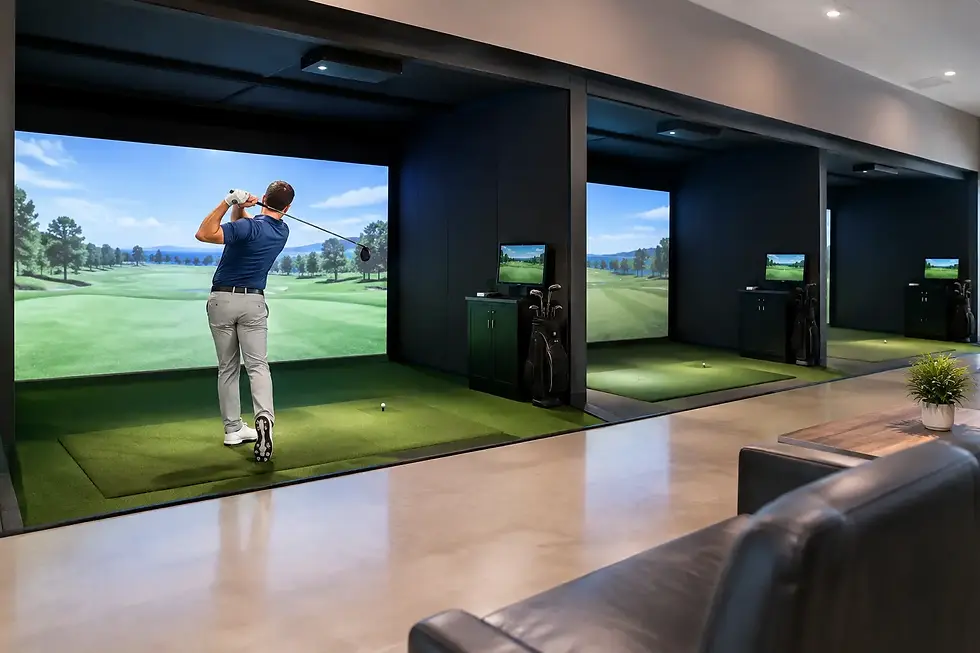
One of the biggest mistakes with a golf simulator for sports bar projects is assuming the system will fit because the floor dimensions look workable on paper. Width, ceiling height, swing clearance, projector placement, walkways, seating, and server access all need to work together.
For most commercial applications, ceiling height is a major checkpoint. Tall players need to swing comfortably, and staff should not be explaining swing restrictions to paying guests. Width also matters because multi-user groups need enough room to rotate in and out safely.
The bay itself is only part of the footprint. A profitable setup often includes adjacent lounge seating, drink rails, a waiting area, and enough circulation space so other guests can move through the venue without entering the hitting zone. This is where custom design makes a real difference. A bar is not a blank box. It has columns, TVs, draft lines, kitchens, exits, and existing revenue zones that cannot be compromised.
Choosing the right hardware for a commercial environment
Commercial buyers should think in terms of reliability first, features second. Yes, launch monitor performance matters. So does image quality. But in a sports bar, equipment also needs to survive heavy usage, varied skill levels, and long operating hours.
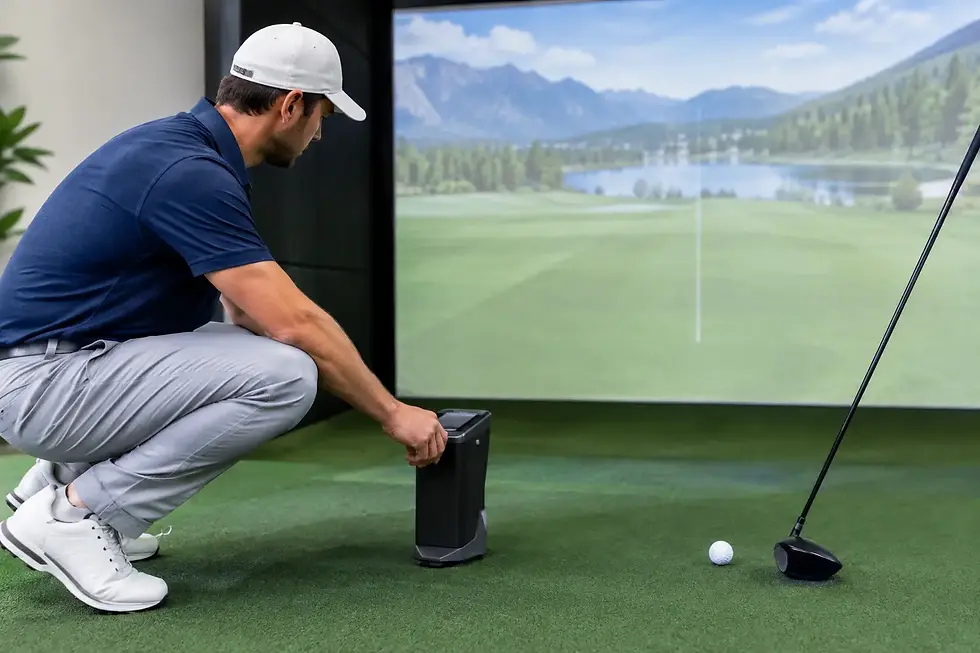
Launch monitors from brands like Trackman, Uneekor, Foresight, and ProTeeVX can all make sense depending on the experience you want to deliver. Some venues want premium ball and club data because they are targeting golfers who will pay for serious practice. Others care more about fun gameplay, ease of use, and stable performance for groups.
The enclosure, screen, hitting mat, projector, computer, and display setup matter just as much as the tracking system. A weak projector in a bright room will hurt the experience. A low-quality mat will wear out early and frustrate players. A poor enclosure fit can affect both safety and appearance. In commercial settings, the details are not cosmetic. They affect uptime and guest perception.
This is one reason many operators prefer a full-service partner instead of piecing together equipment from multiple sources. Design, sourcing, integration, and installation all affect the final result. A premium system only feels premium when every component works together.
The software experience should match your crowd
Not every guest walking into a sports bar wants a lesson-grade golf session. Most want an easy, social experience that starts fast and keeps the group engaged. That is why software selection matters as much as hardware specs.
Course play can be a strong draw, especially for golfers who recognize famous layouts. But bars also benefit from game modes that are easier for mixed groups. Closest-to-the-pin contests, target games, scramble formats, and short challenge modes often create better energy in a social setting than a full 18-hole round.
If your venue plans to run leagues, tournaments, or recurring events, management features become more important. You want software that supports scheduling, scoring, and formats your staff can manage without friction. The right software helps the simulator feel like part of the business, not a tech product guests have to figure out on their own.
Bar operations can make or break the install
A simulator bay should help the floor, not fight it. That means thinking through staffing, food and beverage service, noise, cleaning, and guest flow before installation starts.
For example, table service in the bay area needs to be safe and practical. Servers should not be crossing directly behind a player at address. Drinks need places to land that are outside the hitting area. Flooring should be chosen with spills and heavy traffic in mind.
Noise is another real-world issue. Impact sound, crowd noise, and nearby TVs all shape the experience. Some venues want the simulator as a high-energy feature in the middle of the action. Others do better with a semi-private bay that supports events and paid reservations. Neither approach is automatically better. It depends on your floor plan, customer base, and service model.
How to evaluate return on investment
The cleanest way to think about ROI is not just simulator rental revenue. It is total revenue influence. A simulator can increase dwell time, support premium reservations, drive slower-day traffic, and help you sell private events. It can also differentiate your venue in a crowded market where most bars are offering the same screens, same menu categories, and same game-day atmosphere.
That said, not every sports bar needs one. If your space is too tight, your audience is not likely to book interactive entertainment, or your operation already struggles with traffic flow, a simulator may not be the right next investment. The best projects start with an honest look at how the feature will be used and how it will pay for itself.
This is where experienced guidance matters. A company like Green Pro Golf Simulators can help commercial owners sort through space constraints, equipment options, and use-case fit before money gets spent in the wrong place. That early planning usually saves more than it costs.
What the best installs have in common
The strongest projects are not built around a single product. They are built around the venue. The simulator fits the room, the room supports service, and the technology matches the customer experience the owner wants to create.
That usually means premium equipment, thoughtful design, and a system simple enough for guests to enjoy without constant staff intervention. It also means accepting trade-offs. A brighter room may require more projector power. A smaller footprint may call for tighter bay design. A more advanced launch monitor may be worth it if serious golfers are a core audience, but unnecessary if your business is built around social groups and event traffic.
A golf simulator can absolutely earn its place in a sports bar. The key is making sure it earns more than attention. When the design is right, it drives revenue, creates repeatable experiences, and gives guests a reason to choose your venue over the one next door.

Comments