

Single Bay Versus Multi Bay: Which Fits?

A golf simulator can become the most-used room in a home or the most profitable attraction in a business. The single bay versus multi bay decision determines far more than how many people can play at once. It affects your building requirements, equipment investment, customer experience, staffing needs, and ability to grow.
For many homeowners, one well-designed bay provides everything needed for serious practice, family entertainment, and year-round golf. For commercial operators, multiple bays may create the capacity required to turn simulator demand into dependable revenue. The right answer starts with how the space will actually be used, not simply how many bays can fit on a floor plan.
Single Bay Versus Multi Bay: The Core Difference
A single-bay simulator includes one hitting area, typically with a launch monitor, impact screen, projector or display, turf, computer, and enclosure. It gives one golfer or group a dedicated place to play, practice, and enjoy a premium simulator experience.
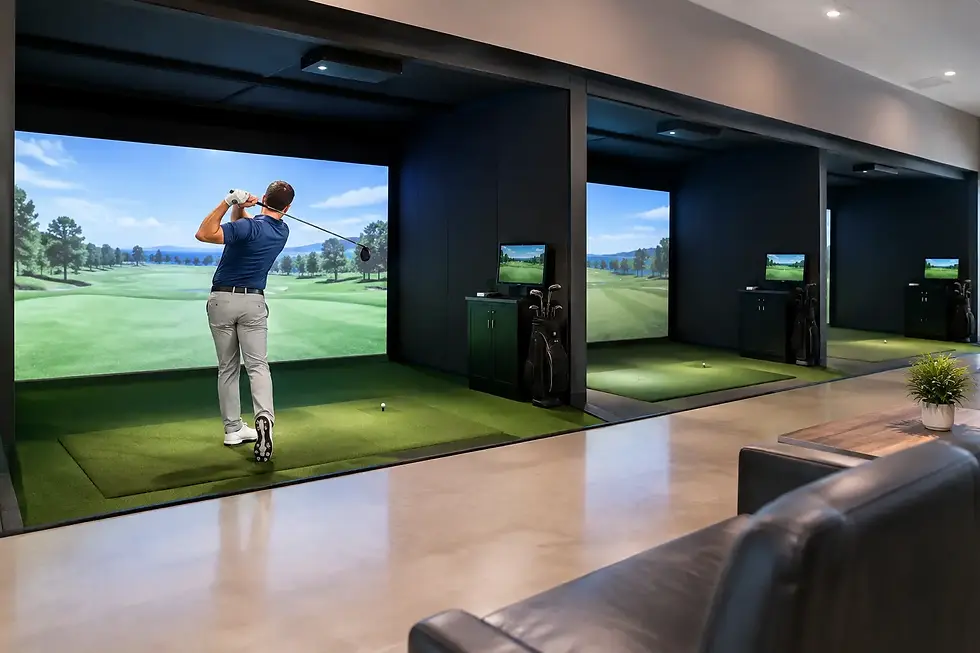
A multi-bay setup includes two or more simulator bays within the same property. Each bay can operate independently, allowing separate groups to play different rounds, practice sessions, or games at the same time. Some commercial sites may pair several identical bays with shared lounge seating, food and beverage service, check-in areas, and storage.
The difference is not merely quantity. A single bay is usually built around focused use and a more personal experience. A multi-bay facility must also account for traffic flow, acoustics, booking patterns, maintenance, electrical capacity, network reliability, and guest comfort across the entire space.
When a Single Bay Is the Better Investment
A single bay is often the best fit for a residence, a private club training room, a golf professional’s teaching studio, or a business that wants to add golf as an amenity rather than make it the primary revenue source.
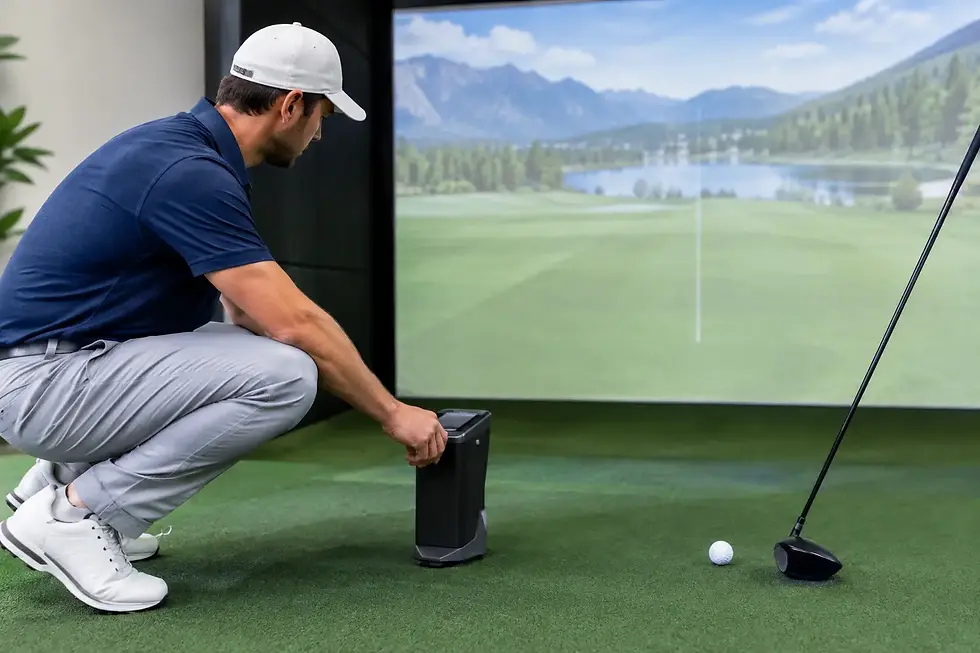
For a homeowner, one premium bay can offer exceptional value. You can practice with accurate ball and club data, play famous courses, host friends, and create a room that works for more than golf. The investment can go toward the components that shape the experience most: a high-quality launch monitor, clear projected image, durable impact screen, proper turf, and a layout that feels comfortable to swing in.
A single bay also makes sense when the available room is limited. The ideal dimensions vary by player height, handedness, launch monitor technology, screen size, and installation design. Still, a well-planned one-bay system can fit in many garages, basements, bonus rooms, and commercial suites where adding a second bay would create cramped walkways or compromise safety.
The operational simplicity is another advantage. One bay means one system to manage, one schedule to coordinate, and fewer components requiring maintenance. That can be especially attractive for a bar, restaurant, or course pro shop testing simulator demand before making a larger commitment.
There is a trade-off. A single bay has a fixed ceiling on capacity. If three groups want to play at 7 p.m. on a Friday, two will need to wait, book another time, or go elsewhere. In a home, that may be a minor inconvenience. In a commercial setting, it can mean missed revenue.
Build quality matters more than bay count
A single bay should never feel like a scaled-down version of a serious simulator. Poor screen tension, inadequate lighting control, an undersized hitting area, or a projector placed without considering shadows can reduce the enjoyment of even the best launch monitor.
A custom design allows the room and technology to work together. Ceiling height, seating position, screen offset, right- and left-handed play, flooring transitions, and access to power all deserve attention before equipment is selected. A professionally designed single bay can deliver a better experience than a rushed multi-bay installation.
When Multi Bay Makes Business Sense
Multi-bay systems are designed for capacity. They are the natural choice for dedicated simulator facilities, golf entertainment venues, busy golf courses, large restaurants, and institutions that expect frequent group use.
The most direct benefit is that multiple bookings can happen at once. A four-bay facility can serve four groups during the same time slot, rather than turning away customers after the first bay is booked. That creates more revenue opportunities from hourly rentals, memberships, leagues, lessons, corporate events, food and beverage sales, and winter programming.
Multiple bays also improve the customer experience when demand is high. Guests are more likely to book when they can find convenient times, and groups are more likely to stay when their friends can play nearby. For businesses, that social energy is part of the product. A room with several active bays can feel lively and purposeful, provided the design leaves enough space for circulation and conversation.
A multi-bay investment works best when there is a clear operating plan. Before adding bays, consider local demand, competitive options, pricing, hours of operation, staffing, league potential, and whether food and beverage service will be part of the model. More bays do not automatically create profitability if utilization is low or the guest experience is inconsistent.
Capacity requires operational discipline
Every additional bay adds more than another launch monitor and screen. It adds another computer, another projection or display system, more cabling, more cleaning, more wear on turf and hitting surfaces, and more opportunities for technical issues during a busy shift.
That does not mean multi-bay facilities are difficult to run. It means they should be designed as commercial environments from the start. Reliable network infrastructure, accessible equipment locations, organized cable management, ventilation, durable finishes, and a support plan help protect uptime. When customers are paying by the hour, a bay that is offline affects both revenue and reputation.
Noise is another practical consideration. Impact screens, conversations, music, and food service can create a busy environment. Proper bay spacing and thoughtful material choices help prevent one group’s round from disrupting another group’s experience.
Comparing Cost Beyond the Initial Purchase
A single bay has a lower entry cost because it requires less hardware and construction. It can also be less expensive to heat, cool, clean, insure, and maintain. That makes it a strong choice for buyers who want premium performance without building a full commercial operation.
A multi-bay project requires a larger upfront budget, but it can improve the economics of the property when demand supports it. The key is to evaluate cost per revenue-producing hour rather than focusing only on the price of each bay. A professionally designed four-bay facility may cost more to build, but it can create far more booking capacity than a single-bay location.
Buyers should also separate the equipment budget from the construction budget. Framing, electrical work, flooring, lighting, HVAC adjustments, finishes, permits, furniture, point-of-sale systems, and sound management can be meaningful parts of a commercial project. Planning for them early avoids compromises later.
For both formats, premium equipment is worth considering when accuracy, durability, and customer confidence matter. Technology from established simulator brands can support a better experience, but the best system is the one matched to your goals, room dimensions, player profile, and operating model.
Space Planning That Protects the Experience
The available square footage should guide the decision, but square footage alone is not enough. Ceiling height often determines whether golfers can swing freely. Room width affects whether right- and left-handed players can use the bay comfortably. Depth influences screen placement, seating, and safe distance behind the hitter.
With multiple bays, leave room between hitting areas and around the perimeter. Guests need a place to set down clubs, wait for their turn, order food, and move without crossing into another player’s swing zone. A layout that maximizes the bay count at the expense of safety or comfort can hurt repeat business.
For homeowners, flexibility may matter most. A garage bay may need to coexist with vehicles or storage. A basement simulator may need to work around support posts, utility rooms, or low ducts. Custom planning can turn those constraints into a clean, finished space without forcing a one-size-fits-all package.
Choosing the Right Path for Your Goals
Choose a single bay when you value focused practice, premium home entertainment, simpler operations, or a lower-risk entry into simulator ownership. It is also the right move when the room supports one excellent experience but not two comfortable ones.
Choose multiple bays when simultaneous play is central to the business model, demand is proven or well-supported, and the property can accommodate a commercial-quality layout. The added capacity should have a purpose, whether that is memberships, leagues, event bookings, instruction, or high-volume hourly rentals.
Green Pro Golf Simulators helps buyers assess the room, the technology, and the real-world use case before recommending a system. That approach keeps the decision centered on long-term value rather than a generic package or an arbitrary number of bays.
The most useful next step is to picture a busy Saturday in your space. Who is playing, who is waiting, where are they sitting, and what happens when the room is full? That answer usually makes the right bay count much clearer.

Comments