
8 Indoor Golf Business Ideas That Can Pay Off

A simulator bay can do more than give golfers a place to hit balls during the offseason. The right concept can create repeat visits, support food and beverage sales, expand lesson revenue, or give members a reason to stay engaged year-round. The strongest indoor golf business ideas start with a clear answer to one question: what reason will customers have to come back next week?
That answer shapes everything from the launch monitor and enclosure to staffing, booking rules, seating, and hours of operation. A premium simulator alone is not a business model. It is the centerpiece of an experience that has to fit your market, your space, and the way customers want to spend their time.
1. A Dedicated Indoor Golf Simulator Facility
A dedicated simulator facility is the most direct model for operators who want recurring hourly revenue. Customers book bays for practice, casual rounds with friends, league play, or private events. This model works especially well in markets with long winters, limited access to quality practice facilities, or a large population of avid golfers.
The opportunity is in using each bay for more than one type of customer. Morning hours may appeal to serious players and coaching clients. Evenings can serve groups, leagues, and corporate outings. Weekends often favor social rounds and parties. Flexible pricing by time, demand, and group size can help maximize the value of your busiest periods without discounting the entire schedule.
Capacity planning matters. Adding bays increases revenue potential, but it also increases the need for square footage, ventilation, waiting areas, computers, maintenance, and customer support. A smaller facility with three or four thoughtfully designed bays can outperform a larger room that feels cramped or is difficult to manage.
2. A 24/7 Membership-Based Golf Studio
A 24/7 studio is a compelling option for communities where golfers value convenience and focused practice. Members can reserve a bay before work, late at night, or whenever their schedule allows. The model is leaner than a full-service entertainment venue, but it depends on dependable technology, controlled access, clear rules, and a booking platform customers trust.
Memberships create predictable monthly revenue, while guest fees, coaching, club fitting, and league events can add incremental income. Some operators offer tiered memberships with different reservation windows or included simulator hours. The best structure depends on how many bays you have and whether the local market is more price-sensitive or convenience-driven.
This concept is not hands-off simply because it is unattended. You still need a plan for cleaning, equipment checks, remote troubleshooting, security, and customer orientation. Reliable premium hardware and a professional installation reduce friction, particularly when customers expect access outside normal business hours.
3. A Bar or Restaurant Golf Experience
For a bar or restaurant, indoor golf can turn a slower night into an event. A simulator bay gives guests an activity between drinks, creates a reason for groups to reserve ahead, and can keep them in the venue longer. It is particularly effective when positioned as social entertainment rather than a serious practice room only.
The layout must protect both the golf experience and the dining experience. Golfers need adequate hitting space, proper ball containment, and a projection setup that remains visible under ambient lighting. Nearby tables need enough separation to avoid feeling like they are sitting inside a driving range. Good acoustics are equally important, since impact noise, music, conversation, and game audio can build quickly in a busy room.
Food and beverage operators should decide whether bay time is billed by the hour, included with a minimum spend, or packaged for groups. A straightforward reservation policy is essential. If a foursome arrives late, your staff needs a consistent way to manage the remaining time, food orders, and the next reservation.
4. An Indoor Golf League and Event Business
Leagues create routine, which is one of the most valuable qualities in a commercial simulator operation. Instead of hoping customers book a random Tuesday night, you can fill recurring time blocks with teams that return for an entire season. Weekly formats also build community, friendly competition, and word-of-mouth referrals.
A league can be as simple as nine-hole weekly play with handicaps and standings. It can also include themed events, partner nights, championship rounds, and sponsor-supported prizes. The important part is keeping the format easy to understand and easy for staff to administer. A complicated scoring system can discourage casual participants.
Private events use the same infrastructure differently. Corporate groups, client outings, bachelor parties, fundraisers, and holiday parties are often willing to pay for reserved space and a managed experience. Packages can combine bay time, food and beverage, instruction, contests, and branded tournament materials. These events are usually more profitable when the space has enough seating for guests who are not actively hitting.
5. A Golf Academy and Coaching Center
For teaching professionals, an indoor simulator creates a year-round coaching environment with measurable data and video feedback. Students can see ball flight, club delivery, face angle, launch conditions, and shot dispersion rather than relying only on feel. That makes the simulator valuable for both beginners who need clear feedback and accomplished players refining specific parts of their game.
The business model can include individual lessons, junior programs, winter development plans, group clinics, and game-improvement memberships. Club fitting is another natural fit when the simulator technology provides accurate ball and club data. A coaching center does not need to feel like an entertainment venue, but it does need a comfortable teaching area and enough room for instructors to work safely around the player.
This model succeeds when the technology supports the instructor's process instead of becoming the focus of the lesson. Choose a system based on the data you need, the courses or practice environments clients expect, and how the room will be used between lessons.
6. A Golf Course or Country Club Practice Extension
Outdoor golf facilities can use simulators to keep members connected when weather limits play. A simulator lounge, teaching bay, or winter practice center can help a course maintain lesson activity, host off-season leagues, and create a new benefit for memberships. It can also give prospective members a tangible reason to view the club as a year-round destination.
For public courses, a simulator can extend the brand beyond peak season. For private clubs, the emphasis may be on member access, instruction, dining events, and member-guest programming. The same equipment can support both, but the access model and atmosphere should reflect the facility's existing culture.
A common mistake is treating the simulator as a temporary winter add-on. It should be planned as part of a broader customer experience, with a visible location, reservation process, staff training, and programming that begins before outdoor play ends.
7. A School, University, or Training Program Facility
Schools and universities can use indoor golf technology for varsity programs, physical education, recreation centers, and sports performance training. For competitive teams, the benefit is consistent practice regardless of weather. Coaches can track progress, build practice plans around measurable outcomes, and give athletes a safer, more controlled environment for swing work.
Institutional projects require especially careful planning. Durability, traffic flow, accessibility, supervision, and IT requirements all deserve attention. A system that works well in a private home may not be the right fit for a student recreation center with frequent users and multiple staff members.
Funding may come from athletics, donor support, campus recreation, or partnerships with local golf organizations. The strongest case is usually broader than golf alone: recruitment, student engagement, coaching support, and a facility asset that can serve multiple programs.
8. A Hybrid Retail, Fitting, and Simulator Studio
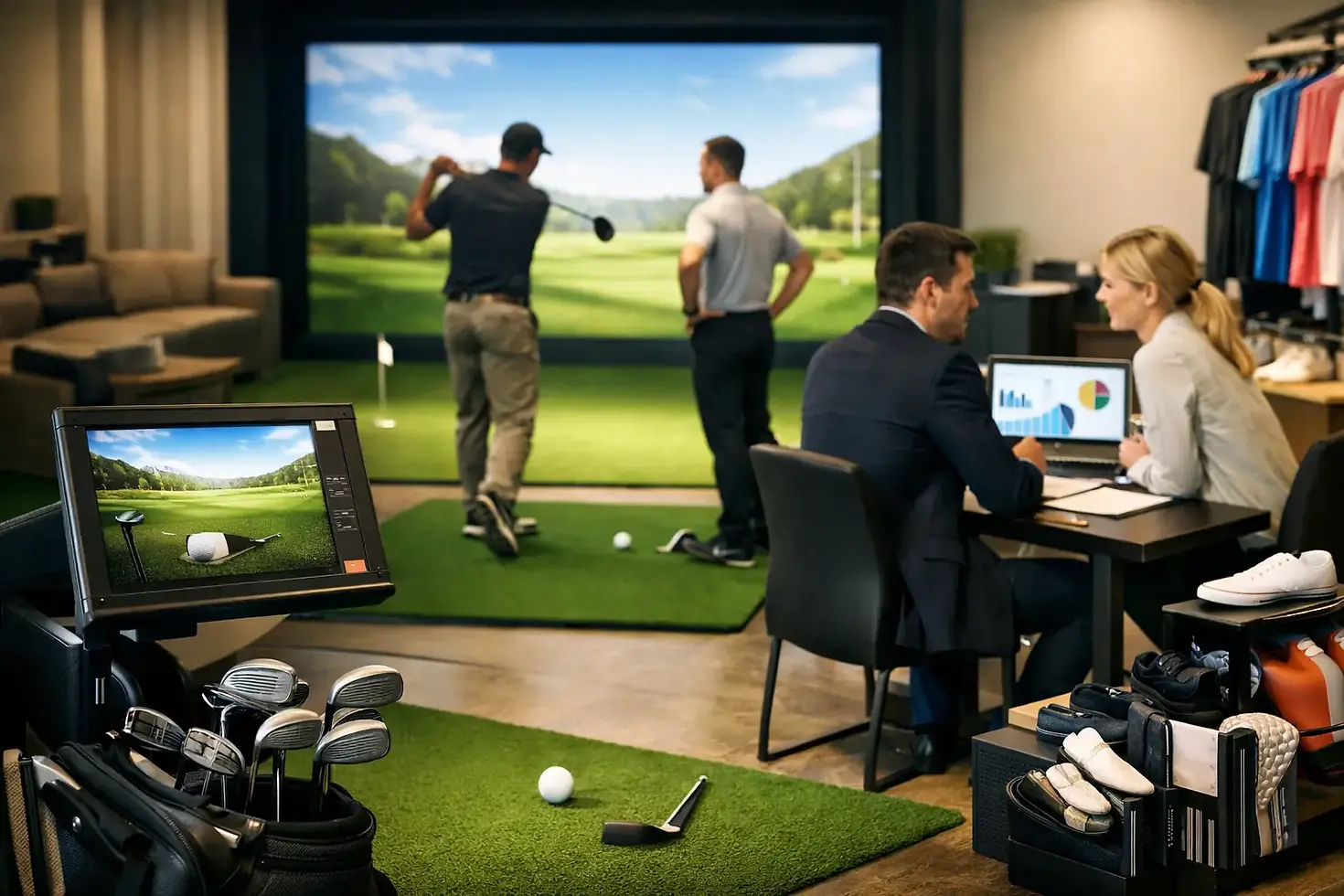
A hybrid studio combines simulator rentals with club fitting, equipment sales, apparel, and lessons. It can be a strong model in markets where golfers want expert buying guidance but local retail options are limited. The simulator gives customers a practical way to test equipment and compare performance rather than making purchase decisions from a display wall.
This concept requires discipline because retail inventory can tie up capital. Start with the categories that support your core customer: fitting services, essentials, accessories, and select premium equipment. Let the simulator experience lead the sale, not the other way around.
How to Choose the Right Indoor Golf Business Idea
Before selecting a concept, evaluate your local demand, available square footage, operating hours, and staffing capacity. A social venue needs seating, service flow, and an atmosphere that encourages groups to stay. A performance-focused studio needs accurate data, privacy, and room for instruction. A 24/7 facility needs access control and technology that can withstand consistent use.
Ceiling height, room width, impact-screen location, projector placement, lighting, and computer infrastructure should be addressed before signing off on a layout. These details affect safety, image quality, player comfort, and long-term reliability. Retrofitting a room after construction is usually more expensive than planning it correctly from the start.
Green Pro Golf Simulators helps commercial operators evaluate these decisions from consultation through custom design, premium equipment sourcing, installation, and ongoing support. The goal is not to force a standard package into your space. It is to build a simulator environment that works for the customers you want to serve.
The best opportunity is rarely the idea with the most bays or the most features. It is the one that gives a specific audience a clear reason to book, return, and tell their friends about it.


Comments