
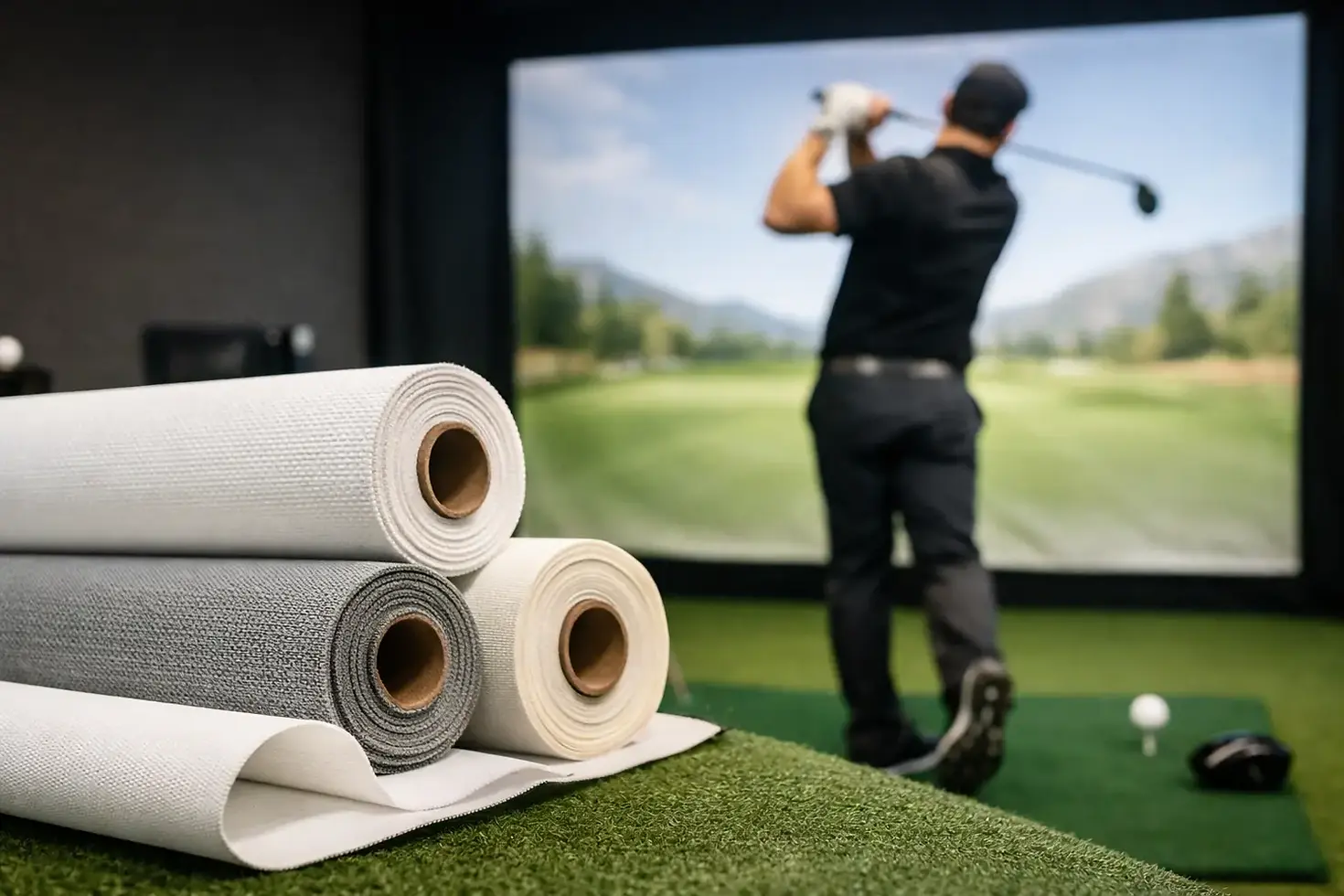
Best Impact Screen Material for Golf Sims

A golf simulator screen can look great on day one and still be the wrong choice. The real test starts after thousands of shots, when ball marks build up, noise becomes hard to ignore, or the image never looks as sharp as you expected. If you are trying to choose the best impact screen material, the right answer depends less on hype and more on how the space will be used.
For a home setup, that usually means balancing image quality, ball speed tolerance, and noise control. For a commercial build, durability and replacement cycles matter more. In both cases, the screen is not just a projection surface. It is a performance component that affects safety, realism, and the overall feel of the simulator.
What makes the best impact screen material?
The best impact screen material handles repeated golf ball strikes without excessive wear, delivers a clean projected image, and manages bounce-back safely. That sounds simple, but those goals can pull in different directions.
A tighter, smoother material often produces a better image. It can also create more noise and a firmer rebound if the enclosure design is not right. A softer or more cushioned material may reduce sound and improve ball absorption, but image sharpness can suffer. That is why the best screen is usually the one matched to the room, launch monitor, player type, and shot volume.
Material weight and weave also matter. Heavier screens tend to hold up better and can feel more substantial in premium builds, but they need proper mounting and enough room behind the screen to perform well. Lighter screens are easier to manage and can work in more compact spaces, though they may show wear sooner under heavy use.
The three priorities that matter most
Most buyers should judge screen material by three things first: image quality, durability, and safety. Everything else follows from there.
Image quality matters because a simulator should feel immersive. If the screen has too much texture, light scatter, or visible distortion, even a high-end projector will not deliver the result you paid for. This is especially important in residential installs where clients want both serious practice and a clean entertainment space.
Durability becomes the deciding factor when players hit high ball speeds regularly or when the simulator serves multiple users every day. Commercial environments, teaching studios, and golf facilities cannot afford frequent downtime or screens that look worn too quickly.
Safety is the non-negotiable piece. A quality impact screen should absorb shots in a controlled way and work with the full enclosure system to reduce bounce-back. Screen material alone does not solve that. Tensioning, spacing behind the screen, side protection, and the way the enclosure is built all affect how safe the setup feels.
Best impact screen material by use case
For home golf simulators
For most home golf simulators, a premium polyester blend or tightly engineered multilayer impact screen is the best fit. These materials usually offer the strongest balance of image quality, durability, and controlled ball absorption.
A home user often wants the screen to do two jobs well. It needs to stand up to driver shots, but it also needs to look good during simulator rounds, sports viewing, or family entertainment. That makes all-purpose premium material more appealing than ultra-heavy commercial fabric in many cases.
If the simulator is going in a garage or basement with moderate use, a midweight premium screen is often enough. If the player is a high-speed golfer or the setup will be used daily, stepping up to a heavier-duty material makes sense.
For commercial simulator spaces
In commercial settings, the best impact screen material usually leans heavier and more durable, even if that means giving up a little image softness or requiring more thoughtful projector calibration. Volume changes everything.
A bar, restaurant, golf facility, or 24/7 simulator site can put far more wear on a screen in a month than a home user sees in a year. In those environments, replacement intervals, maintenance planning, and consistency matter more than squeezing out the last bit of visual refinement.
Commercial buyers should also think beyond the center hit zone. High-use facilities often benefit from screen systems designed for replaceable panels or wear management, especially if right- and left-handed players are both using the bay heavily.
For high-ball-speed players
If the user regularly swings at high speed, durability and bounce-back control should take priority over price. This is where lower-grade screen materials often show their limits quickly.
Faster ball speeds create more visible stress, more noise, and greater demands on the enclosure. A quality screen material can handle those shots, but only when the rest of the build supports it. In these cases, the best result usually comes from pairing premium screen material with proper backing, enough depth behind the screen, and professional installation.
Material trade-offs most buyers miss
The biggest mistake is assuming there is one universal best impact screen material for every simulator. There is not.
Some buyers focus only on thickness and assume thicker means better. In practice, thickness alone tells you very little. A screen can be thick but still offer mediocre image quality, poor tension behavior, or inconsistent ball response. The weave, coating, and construction matter just as much.
Others choose based on projector image alone. That can backfire if the screen rebounds shots too aggressively or wears out under normal play. A beautiful image loses its appeal quickly if the bay becomes noisy, harsh, or high maintenance.
There is also the question of wrinkles and sag over time. Better materials generally hold their appearance longer, but installation is just as important. Even the best screen can underperform if it is mounted incorrectly or placed in a room that does not allow enough depth.
Why enclosure design matters as much as screen material
A screen should never be chosen in isolation. The enclosure, frame, padding, and room dimensions all influence how the material performs.
If a screen is stretched too tightly, bounce-back can increase and impact stress can become more concentrated. If it hangs too loose, the image can suffer and the hitting experience can feel less polished. The right setup creates a controlled strike surface that protects the player while preserving image quality.
This is one reason custom simulator design matters. A basement with limited depth, a garage with flexible use, and a commercial bay with all-day traffic should not use the same assumptions. The best material on paper may not be the best one for your room.
How to choose the best impact screen material for your setup
Start with usage. If this is a personal simulator for practice and entertainment, you want a screen that balances image clarity and durability. If it is a revenue-generating bay, durability usually leads the conversation.
Then look at the player profile. A casual player hitting irons a few times a week has different needs than a former college golfer swinging driver at full speed every session. Ball speed, shot frequency, and number of users should shape the screen recommendation.
Projector expectations matter too. If you are investing in premium simulator technology and want a more refined visual result, screen material becomes even more important. A low-grade screen can hold back an otherwise high-end build.
Finally, think about the full room. Ceiling height, bay depth, side clearances, and noise sensitivity all affect what screen will work best. In many projects, the right answer is not the most expensive screen available. It is the one that performs correctly within the specific space.
When it pays to go premium
Premium impact screen material is usually worth it when the simulator is a long-term investment rather than a short-term experiment. That applies to serious home golfers, multipurpose family spaces, teaching studios, and commercial venues.
A better screen tends to look better longer, feel more consistent, and reduce the frustration that comes from premature wear or poor rebound behavior. It also protects the value of the rest of the simulator. There is little benefit in pairing top-tier launch monitor technology with a screen that becomes the weak point of the room.
At Green Pro Golf Simulators, that is why screen selection is treated as part of the full system design, not an afterthought. The best impact screen material is the one that fits the player, the space, and the level of use from the start.
If you are building a simulator that should perform well for years, choose the screen the same way you would choose the launch monitor or projector - based on how you actually plan to use it, not just how it looks in a product description.


Comments