

Foresight versus ProTeeVX: Which Fits Your Room?

The first question in a Foresight versus ProTeeVX decision should not be, “Which one is better?” It should be, “How will this simulator be used?” A dedicated player building a precision practice studio has different priorities than a family turning a basement into an entertainment room. A golf bar needs repeatable operation and an inviting experience for groups. The right launch monitor is the one that supports the room, the golfer, and the long-term plan for the space.
Both Foresight and ProTee VX belong in the premium simulator conversation. They can deliver compelling indoor golf, dependable shot measurement, and the foundation for a custom build. Their strengths, however, are not identical. Understanding those differences before selecting screens, projectors, flooring, and software can prevent an expensive mismatch.
Foresight versus ProTeeVX: The Core Difference
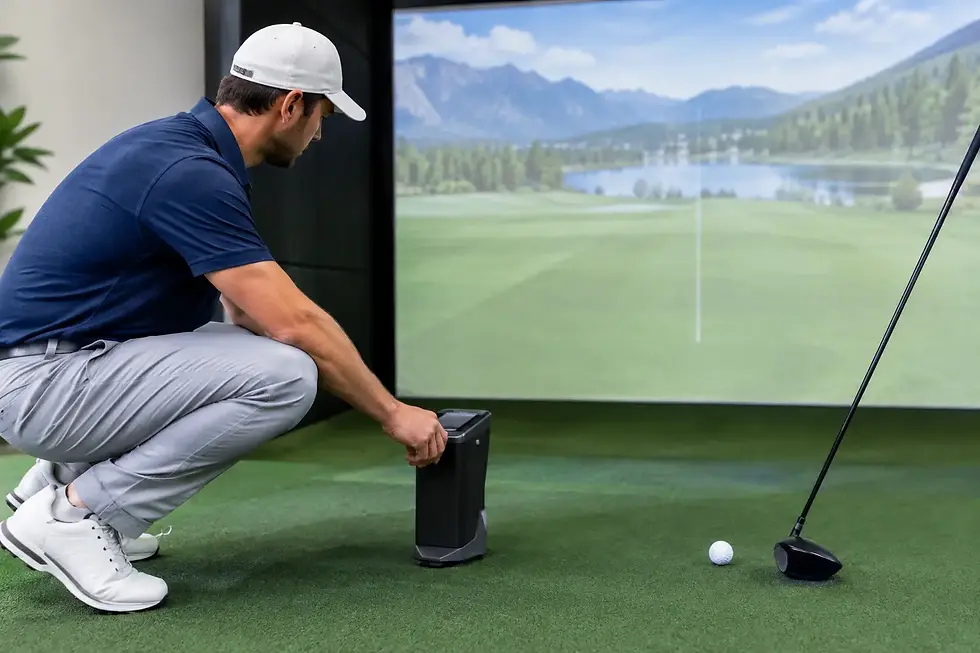
Foresight Sports is best known for camera-based launch monitors and a data-first approach to golf simulation. Depending on the model, a Foresight system can provide highly detailed ball and club delivery information that serious players, coaches, club fitters, and facilities value. Products such as the GC3 and Quad are often selected for portable flexibility, while overhead options are designed for permanent simulator environments.
ProTee VX is an overhead, camera-based launch monitor built specifically for installed simulator spaces. Its appeal is straightforward: it keeps the hitting area open, allows right- and left-handed players to rotate naturally, and provides a clean look without placing a unit in front of the ball. That makes it particularly attractive for home entertainment rooms, commercial bays, and shared-use facilities.
Neither approach is automatically right for every project. Foresight offers a broader family of launch monitor formats and an established ecosystem for players who want trusted, granular feedback. ProTee VX is especially compelling when an overhead installation, ease of use, and smooth multiplayer flow are central to the design.
Start With the Way You Play
A player focused on improving face control, strike quality, and gapping should put measured data at the center of the decision. Foresight systems have a strong reputation among golfers who want meaningful feedback from every session. The ability to practice with dependable ball data and, on supported models, comprehensive club data can make a simulator feel like a serious training environment rather than a novelty.
That does not mean ProTee VX is only for casual golf. It provides the ball and club information most simulator owners need to practice productively, play courses, and understand their tendencies. For many home golfers, the practical advantage is the experience around the shot: walk in, place the ball, swing, and let the system work overhead. No repositioning a portable unit. No concern about a player standing too close to the launch monitor.
For a household with both right- and left-handed golfers, overhead placement can be a major advantage. For a coach, fitter, or advanced player who wants the deepest possible analysis for a particular workflow, the specific Foresight model and its data capabilities may carry more weight. The best choice depends on whether your priority is detailed evaluation, effortless group play, or a measured balance of both.
Portable flexibility versus permanent integration
This is one of the clearest dividing lines. Certain Foresight launch monitors can move from the simulator room to the driving range, putting green, or outdoor lesson. That flexibility has real value for golfers who practice in multiple settings or professionals who need a system that travels.
ProTee VX is intended to live overhead in a finished bay. Once installed and calibrated, it becomes part of the room. That permanent placement is not a drawback when the simulator is designed as a dedicated amenity. In fact, it can make the finished space cleaner, safer, and easier for guests to use.
If your simulator must do double duty outdoors, a portable Foresight option deserves serious consideration. If your objective is a polished indoor room that is ready whenever you are, ProTee VX fits that mission very well.
Room Design Matters More Than Most Buyers Expect
Launch monitor selection affects nearly every other decision in a simulator build. Ceiling height, room width, impact screen position, hitting mat location, projector placement, lighting, computer location, and cable routing all need to work together.
An overhead ProTee VX installation requires thoughtful measurement and placement above the hitting zone. It is an excellent fit for rooms where clean sightlines and unrestricted floor space matter. Because the unit is out of the way, the bay can feel less technical and more like a finished entertainment area.
Foresight can support several room strategies depending on the product selected. A floor-based or portable unit needs protected space near the ball and clear operating procedures. Overhead Foresight options can provide the tidy, built-in look many clients want, while maintaining the brand’s data-oriented experience. There is no substitute for reviewing the exact room dimensions before choosing a model.
Ceiling height also deserves an honest conversation. A simulator may technically fit in a room, but a golfer still needs to make a confident, unrestricted swing. For many adult golfers, a higher ceiling provides a better experience. Room width matters just as much in shared-use spaces, particularly if both right- and left-handed players will hit. Good design protects the technology, but great design protects the swing.
Software and Course Play Should Be Part of the Decision
A launch monitor is only one part of the simulator experience. The software determines how you practice, what courses you play, how easily you host competitions, and what your guests see on screen.
Foresight has its own software ecosystem, with practice ranges, game modes, course play options, and performance tools that align closely with its hardware. Buyers who prefer an integrated experience often appreciate having hardware and software designed to work together. The right package will depend on whether your use is personal practice, instruction, entertainment, or business operation.
ProTee VX is frequently considered by buyers who want flexibility in their simulator software setup. Compatibility, licensing, computer specifications, and feature availability should always be confirmed for the exact version and intended use. This is especially important for commercial installations, where software licensing and reliability matter just as much as visual quality.
Do not choose a launch monitor based only on a video clip of course play. Ask what practice modes you will use weekly, whether you want online play or leagues, how many golfers will use the room, and what software costs may look like over time. The most impressive virtual course library is less valuable if the day-to-day workflow frustrates the people using it.
Budget for the Finished Experience, Not Just the Sensor
Comparing equipment prices without comparing the total build can lead buyers in the wrong direction. The launch monitor is a critical investment, but the screen enclosure, impact material, turf, hitting surface, projector, gaming computer, audio, electrical work, and installation all shape the final experience.
Foresight pricing varies significantly by model, portability, data capabilities, and software package. ProTee VX occupies a premium installed-simulator category, but its overall value should be considered within a complete room plan. In a commercial setting, the ability to accommodate different golfers quickly can be worth far more than a small difference in upfront equipment cost.
Residential buyers should also think about what they are protecting. A properly designed enclosure, suitable impact screen, quality hitting surface, and correct projector placement help a premium launch monitor perform as intended. Cutting corners around the sensor often creates glare, poor visuals, unsafe clearances, or a room that feels unfinished.
Which System Is the Better Fit?
Foresight is often the stronger fit for golfers who prioritize advanced performance data, portable use, coaching, club fitting, or an established hardware-and-software ecosystem. It can also be an excellent choice for permanent installed rooms when paired with the right overhead model and room design.
ProTee VX is often the stronger fit for homeowners and businesses seeking a dedicated overhead system with a clean bay layout, easy right- and left-handed play, and a user-friendly experience for families, guests, leagues, and repeat customers. It is particularly well suited to spaces where the simulator needs to feel integrated into the room rather than set up around a device.
The trade-off is not simply accuracy versus convenience. Both platforms can support meaningful practice and enjoyable play. The real trade-off is between the type of data, hardware format, software workflow, installation requirements, and operating experience that best match your goals.
A thoughtful consultation should begin with your room measurements, ceiling height, golfer handedness, practice goals, preferred software, and budget for the complete project. Green Pro Golf Simulators approaches those details as one connected system, because that is how a simulator becomes a room you want to use every week. Choose the platform that fits your golf life, then build the space around it with no compromises where they matter.


Comments