

Year Round Golf Training Benefits That Last

A great round can expose a frustrating truth: the swing you trusted in October may not feel the same after months away from the course. The most meaningful year round golf training benefits come from removing that stop-and-start cycle. When practice is available on your schedule, your game has a chance to build instead of reset.
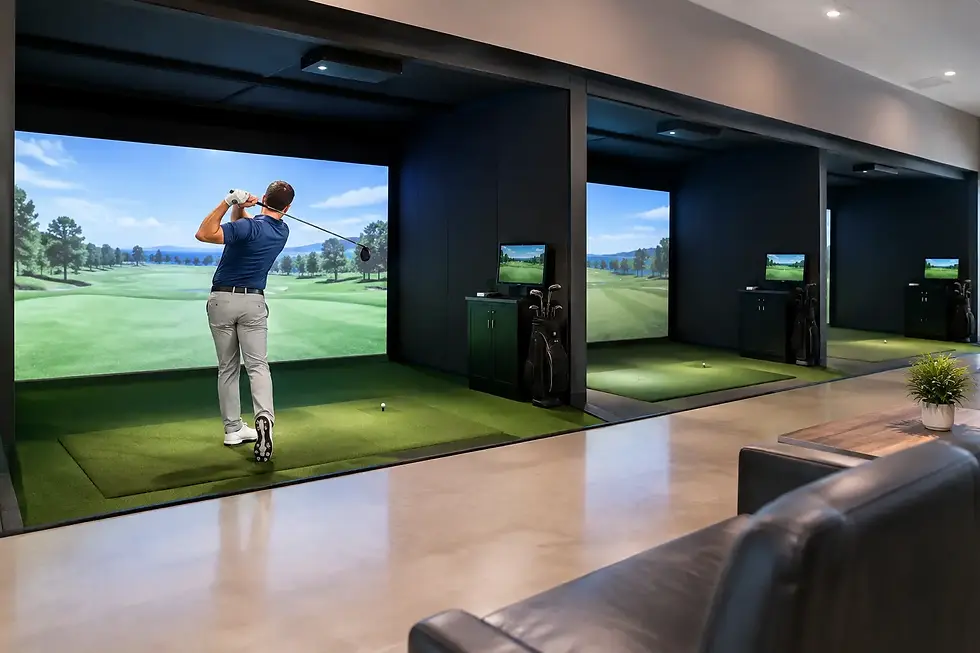
For golfers in climates with long winters, that can mean keeping a handicap from drifting upward. For busy professionals, it means fitting purposeful practice into an hour after work rather than trying to reserve an entire afternoon. And for homes, golf facilities, bars, and schools, an indoor simulator creates a reliable place to play, learn, and compete regardless of weather.
Year Round Golf Training Benefits Start With Consistency
Golf improvement rarely comes from one marathon range session. It comes from repeated, intentional work: seeing ball flight, checking a number, making an adjustment, and testing it again. A quality indoor simulator gives golfers a place to do that throughout the year.
When a practice space is steps away in a basement, garage, or dedicated golf room, the barrier to getting started gets much lower. A golfer can spend 20 focused minutes working on face angle, club path, or carry distance without driving to a range, waiting for a stall, or hoping the weather holds. Those shorter sessions are often more productive than occasional, unfocused practice.
Consistency also helps players retain what they learn from a lesson. A coach may identify a setup change or swing priority, but it takes repetition to make that adjustment feel natural. Practicing indoors between lessons gives the golfer immediate opportunities to reinforce the work while the instruction is still fresh.
Feedback Turns Repetition Into Productive Practice
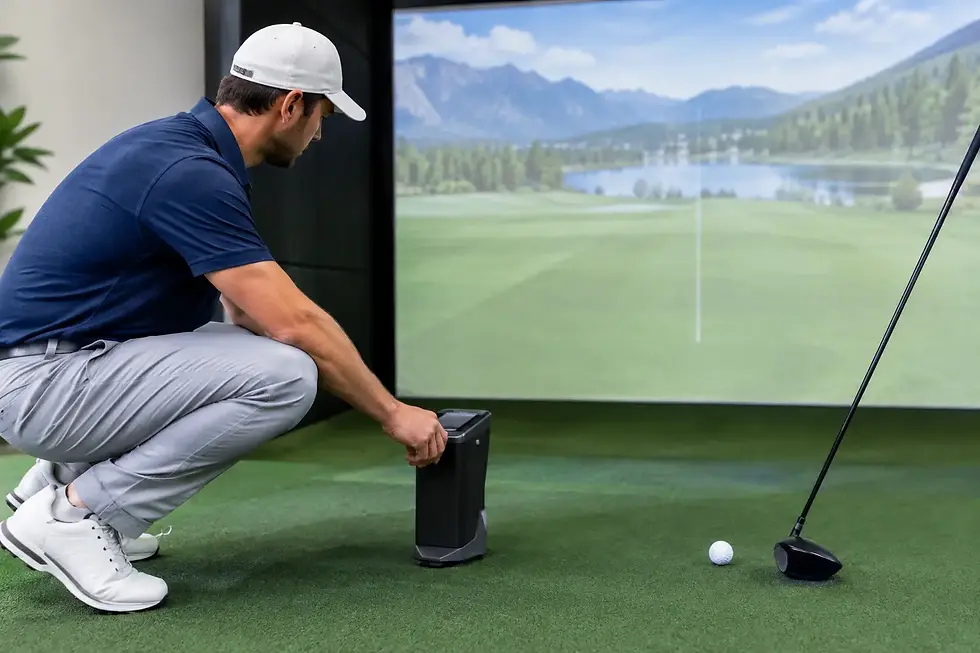
Not every swing needs to be perfect, but every practice session should have a purpose. Premium launch monitor technology can provide useful feedback on ball speed, launch angle, spin, club delivery, dispersion, and carry distance. Instead of relying only on feel, a player can see whether a change is actually producing the intended result.
That matters because feel and real can be very different in golf. A swing that feels shorter may not be shorter. A shot that feels like a draw may still be starting too far right. Reliable data makes it easier to identify patterns and avoid chasing a quick fix based on one poor shot.
The right amount of information depends on the player. A beginner may benefit most from carry distance and a simple target game. A competitive golfer may want deeper club and ball data. A well-designed simulator setup should match those goals, not overwhelm the user with numbers they will never use.
Practice the Parts of Golf That Usually Get Ignored
Most golfers hit far more full shots on the range than they do on the course. That is understandable, but better scoring usually depends on dialing in distances, controlling misses, and handling pressure when a shot matters. Indoor simulation makes it easier to turn those priorities into repeatable practice.
A player can build a wedge matrix by recording stock carry distances at several swing lengths. They can test which club produces the most reliable result from 125 yards, or practice approaches to specific pin locations on virtual courses. Over time, that knowledge leads to smarter decisions outdoors.
Simulator practice can also make putting and short-game work more engaging when the system and space are designed for it. Some rooms prioritize full-swing performance, while others include putting surfaces or dedicated short-game features. The trade-off is space and budget. A custom design conversation should determine whether the goal is a focused training bay, an all-around entertainment room, or a commercial installation built for frequent play.
Build Confidence Before the Season Opens
Confidence in golf is not just optimism. It is knowing what your typical shot does and trusting that you have practiced the situations you are likely to face. Offseason training gives golfers time to learn their numbers, refine their pre-shot routine, and play demanding courses without the pressure of losing a weekend round.
Virtual course play is especially valuable for this. Playing a simulated round requires club selection, target choice, and recovery decisions. It is not a replacement for real turf, uneven lies, wind, or the pace of a live foursome. But it is a practical way to keep course-management skills active when outdoor golf is unavailable.
For many players, simulated rounds also provide a more enjoyable alternative to repetitive range sessions. Competition with friends, league nights, closest-to-the-pin contests, and skills challenges create reasons to use the space regularly. More engagement usually means more swings, and more quality swings create more opportunity to improve.
Convenience Protects Your Time and Your Golf Budget
Outdoor practice has hidden costs. There is travel time, range balls, green fees, lessons, weather cancellations, and the simple inconvenience of trying to fit golf into a packed calendar. An indoor simulator does require an upfront investment, and premium equipment is not the right purchase for every household. But for avid golfers who practice and play frequently, the convenience can change how often the space gets used.
A home simulator does not have to replace the golf course to provide value. It can complement outdoor play by making practice more accessible and helping players arrive at the first tee prepared. Families also gain an entertainment space that can be used by golfers and non-golfers alike, especially when the room includes a quality projector, screen, sound, and flexible seating.
For commercial operators, year-round access can create dependable activity during slower golf months. Restaurants and bars can offer group events, while golf facilities can extend training, lessons, leagues, and club-fitting opportunities beyond daylight hours. Schools and programs can provide students with structured practice in a controlled environment. In each case, reliability matters as much as impressive technology. The system needs to fit the traffic level, room conditions, and staff support available.
A Good Simulator Room Is Built Around How You Will Use It
The best results do not come from selecting equipment first and trying to force it into a room later. Ceiling height, room width, depth, lighting, flooring, impact protection, computer placement, and projector location all affect the final experience. A space that works beautifully for a right-handed golfer may need additional planning if left-handed users, groups, or commercial traffic are part of the equation.
That is why custom design is valuable. A garage may offer excellent depth but need insulation and climate planning. A basement may be ideal for a polished entertainment room but have ceiling-height limitations. A commercial facility needs durable finishes, efficient room flow, and components selected for frequent use. There is no single best simulator package because the right answer depends on the space and the goal.
At Green Pro Golf Simulators, the process is centered on pairing premium technology with a practical room plan, whether the priority is serious player development, family entertainment, or a revenue-producing commercial venue. Direct product knowledge and thoughtful installation help protect a significant investment from avoidable compromises.
Make Your Practice Plan Simple Enough to Repeat
A simulator is most valuable when it becomes part of a routine. Start with one or two measurable priorities for a month, such as improving driver dispersion or building dependable wedge carries. Alternate data-focused sessions with virtual rounds so practice remains purposeful without becoming tedious.
Keep the sessions realistic. A 30-minute session with a clear target can be more useful than hitting 150 balls without a plan. Save or note key numbers over time, then use them to set on-course expectations rather than trying to create a different swing before every round.
The real advantage of an indoor golf space is not that it promises instant improvement. It gives committed golfers a dependable environment to put in better work, more often. When the next outdoor season arrives, the goal is simple: walk to the first tee with a swing that has not been waiting all winter.

Comments