

Golf Simulator Industry Trends Shaping 2026

A golf simulator is no longer a novelty tucked into a man cave. For serious golfers, it has become a year-round practice environment. For homeowners, it is a high-use entertainment feature. For business owners, it can create a repeatable revenue stream that keeps customers engaged long after the driving range closes.
That shift is driving the golf simulator industry trends shaping 2026. Buyers are placing more emphasis on accurate ball data, room design, dependable technology, and a finished experience that works as well on a busy Saturday night as it does during a focused practice session. The result is a market moving away from one-size-fits-all packages and toward thoughtfully engineered simulator spaces.
Golf Simulator Industry Trends: Custom Is the New Standard
The biggest change is not a single launch monitor or software feature. It is the expectation that a simulator should fit the way the owner plans to use it.
A basement build for a low-handicap player may prioritize overhead tracking, a wide hitting area, club and ball data, and a computer capable of running detailed practice software. A garage simulator may need retractable components, durable finishes, and enough flexibility to preserve vehicle access. A commercial venue may require multiple bays, easy player flow, stronger networking, and equipment selected for long operating hours.
These are very different projects, even if each includes a screen, projector, enclosure, and launch monitor. Buyers increasingly understand that room dimensions, ceiling height, right- or left-handed play, lighting, acoustics, and power planning affect the experience as much as the simulator brand itself.
That is why a site-specific design process matters. A premium system placed in the wrong configuration can create avoidable shadows, limited swing clearance, poor image quality, or unreliable readings. Conversely, a well-designed room can make a modest footprint feel polished, comfortable, and highly functional.
Multi-use rooms are gaining ground
Dedicated golf rooms remain popular, but many residential buyers want a space that does more. A simulator can serve as a movie screen, game-day gathering area, family recreation room, or a place for guests to play courses around the world. This demand is influencing screen choices, projector placement, seating layouts, sound systems, and control options.
The trade-off is simple: flexibility requires planning. A room designed only for golf can maximize hitting area and practice performance. A multi-use room may need additional protection, more thoughtful furniture placement, and a cleaner way to hide or organize equipment. Neither approach is better in every case. The right answer depends on how often the room will be used for golf versus entertainment.
Better Data Is Raising Buyer Expectations
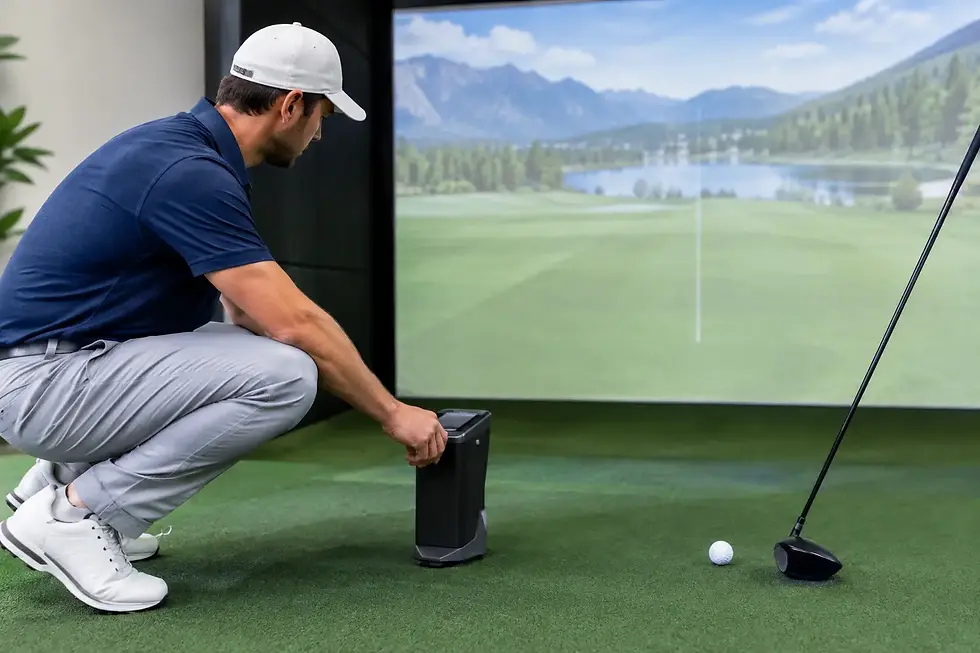
Launch monitor technology continues to be the centerpiece of premium simulator demand. Golfers want dependable measurements they can trust, including ball speed, launch angle, spin, carry distance, club path, and face data where supported. They also want to see that information presented in a way that helps them improve rather than simply producing more numbers.
Trackman, Uneekor, Foresight, and ProTeeVX each bring different strengths to a project. Some setups are especially appealing for their overhead convenience and ability to accommodate both right- and left-handed golfers without moving the unit. Others appeal to players who prioritize specific data sets, portability, visual feedback, or a particular software ecosystem.
There is no universal "best" monitor without context. The best fit depends on the player, the room, the intended software, whether the system will be used commercially, and the budget allocated to the total build. A good buying decision starts with the desired outcome - better practice, better entertainment, easier group play, or a stronger business offering - then matches technology to that goal.
Practice is becoming more purposeful
Simulator owners are using their systems beyond virtual rounds. Gapping sessions, wedge distance control, driver optimization, and swing analysis are becoming regular parts of home practice. That creates demand for systems with accurate short-game readings, clear data displays, and enough space to swing freely with every club.
For golfers who take improvement seriously, convenience is a major value driver. A session at home can happen before work, after the kids are asleep, or during a Minnesota winter when outdoor practice is not an option. The easier it is to start a productive session, the more likely the simulator is to become part of a consistent routine.
Commercial Demand Is Focused on Experience and Uptime
Commercial simulators are growing beyond traditional golf facilities. Bars and restaurants use them to create an activity that extends guest dwell time. Golf courses use indoor bays for lessons, fittings, leagues, and off-season engagement. Dedicated 24/7 facilities are being built around flexible memberships, bay rentals, and organized competition.
But commercial success is not created by installing a simulator and waiting for bookings. The customer experience has to be easy from the moment a group walks in. Bays need to feel comfortable, visually appealing, and intuitive for first-time players. Staff need a reliable way to start sessions, solve basic issues, and keep play moving.
Uptime is equally important. Commercial operators should favor professional installation, durable materials, accessible service points, and computer systems sized for the workload. Saving money on a component that creates frequent resets or difficult troubleshooting can cost more in lost revenue and customer frustration than it saves upfront.
The strongest commercial concepts also build programming around the technology. Leagues, corporate events, seasonal tournaments, instruction packages, and food-and-beverage specials give customers reasons to return. A simulator bay is the platform, but recurring activity is what turns it into a business asset.
Premium Visuals Still Matter
Accuracy gets golfers through the door, but image quality and room finish often determine whether a space feels premium. High-resolution projectors, properly tensioned impact screens, calibrated image placement, and controlled lighting help create the immersive look buyers expect.
The visual side of a project is also where shortcuts become obvious. A projector that is not suited to the throw distance can produce a small or distorted image. Ambient light can wash out the screen. Poorly planned projector placement can put shadows in the hitting area. Cabling that was treated as an afterthought can make an otherwise beautiful room look unfinished.
This is why the industry is moving toward complete systems rather than disconnected equipment purchases. The launch monitor, projector, computer, screen, enclosure, flooring, lighting, and software must work together. Premium brands matter, but integration matters just as much.
The Buying Conversation Is Becoming More Practical
As more buyers research simulators, the conversation is becoming less focused on headline price and more focused on total project value. A low initial quote may not include installation, a suitable gaming computer, mounting hardware, room preparation, or the support needed to get everything running correctly.
Buyers should ask what is included, what the room needs before installation, and how support works after the build is complete. They should also be honest about their space. Ceiling height, usable width, and depth are not minor details. They determine swing comfort, screen size, camera placement, and whether both right- and left-handed golfers can play naturally.
Budget should be treated as a range tied to priorities. A golfer who values practice data may direct more of the investment toward the launch monitor. A homeowner building a showpiece entertainment room may prioritize finish work, projection, and audio. A commercial operator may place the greatest value on durability, efficient bay layouts, and serviceability.
Green Pro Golf Simulators approaches these decisions as a full project, not a box of equipment. The goal is to help buyers put premium technology in a configuration that makes sense for their room, their game, and the people who will use it.
What This Means for Buyers in 2026
The most valuable simulator is not necessarily the most expensive one. It is the one that gets used consistently, delivers trustworthy performance, and fits the space without compromise. For a home, that may mean a refined practice room that also hosts family movie nights. For a business, it may mean a durable, well-managed bay that creates repeat customers and dependable revenue.
Before choosing equipment, start with the room and the intended experience. Measure carefully, identify the primary users, decide whether entertainment or player development leads the priority list, and plan for professional installation where the project calls for it. The technology will keep improving, but a well-designed space gives that technology a reason to earn its place every day.


Comments