
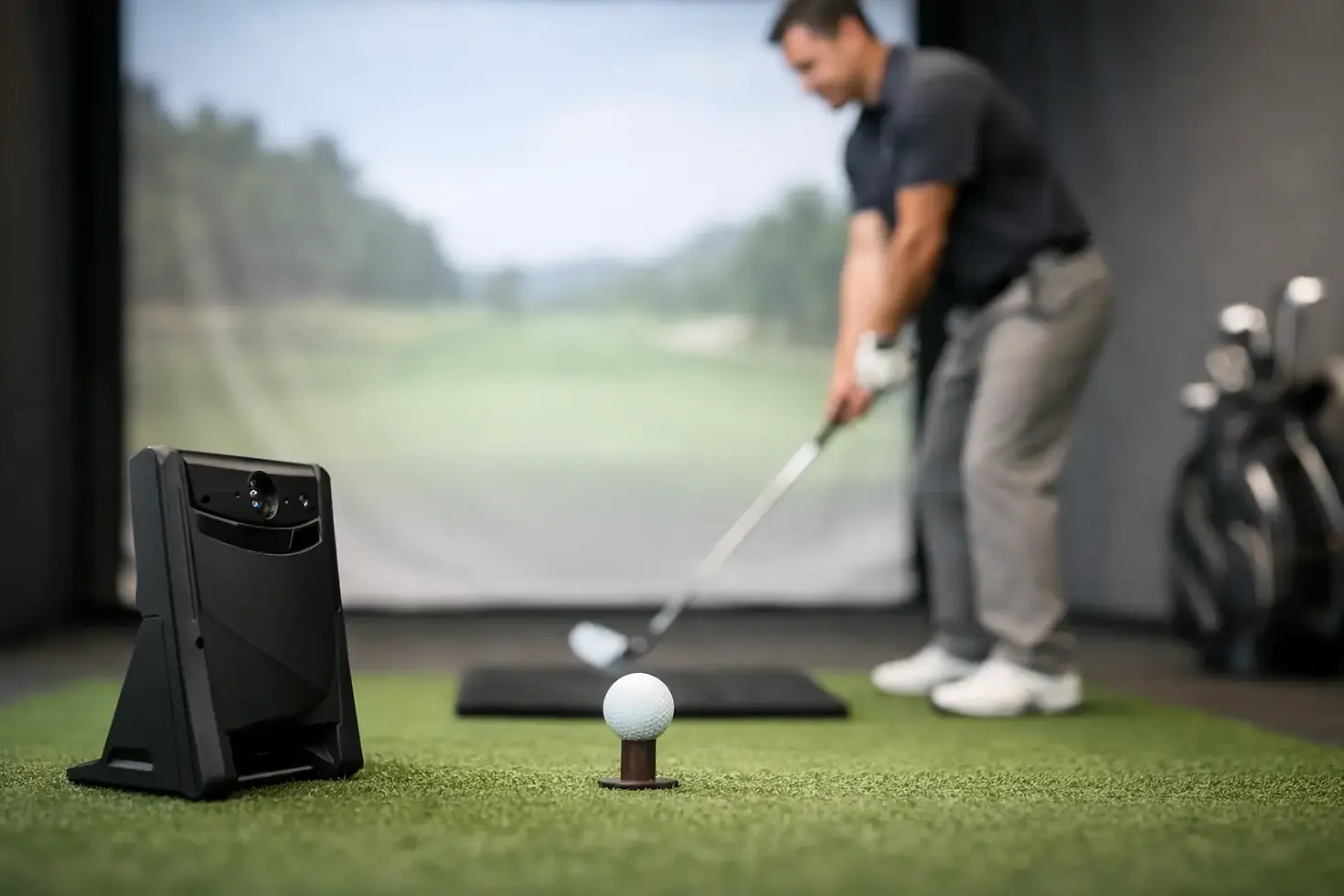
How Launch Monitor Accuracy Indoors Changes

A launch monitor can be extremely precise in a controlled indoor setup, but indoor performance is never just about the device itself. Launch monitor accuracy indoors depends on the room, the ball, the lighting, the club delivery window, and how well the system is matched to the space. That is why one golfer can get excellent numbers in a garage while another sees inconsistent spin, shot shape, or carry distances in a room that looks similar on paper.
For buyers investing in a home simulator or a commercial build, this matters for more than curiosity. If your numbers are off, practice gets less productive, fitting decisions get weaker, and customer confidence drops fast. The good news is that indoor accuracy is usually very achievable when the system, space, and installation are all working together.
What launch monitor accuracy indoors really means
Most golfers judge accuracy by one question: does the shot on screen match what they expect from the swing they just made? That is fair, but real indoor accuracy has a few layers. Ball speed, launch angle, spin, side spin or spin axis, club path, face angle, carry distance, and curvature all have to be measured or calculated correctly enough to create a believable result.
Indoors, the biggest challenge is that the monitor sees less of the full flight than it would outside. Some technologies measure the ball almost immediately after impact and project the rest of the flight from those early readings. Others track movement over a longer window but still work within the limits of the room. That does not automatically make indoor data unreliable. It simply means setup quality matters more.
A premium launch monitor in a poor environment can underperform. A well-matched system in a properly designed room can deliver data that is highly dependable for game improvement, club fitting, and daily use.
Why launch monitor accuracy indoors varies by technology
Not all launch monitors work the same way, and that has a direct effect on indoor results. Camera-based systems use high-speed imaging to capture impact and early ball movement. These are often very strong indoors because they are designed to read what happens in a short hitting zone. Radar-based systems track movement differently and may need more ball flight and more carefully planned placement to produce their best numbers indoors.
That does not mean one category is always better. It means the right fit depends on the room and the goal. If you are building a simulator in a basement with limited depth, a system that performs well in tighter spaces can make more sense than a device that shines when it has a longer read window. If you are outfitting a commercial facility with well-planned dimensions, you may have more flexibility.
This is where buyers often make a costly mistake. They compare launch monitor brands by headline features instead of asking how each unit performs in their actual environment. Indoor accuracy is not just a product question. It is a room-and-installation question.
The space itself has a major impact
Ceiling height, room depth, room width, hitting position, and monitor placement all affect results. A player who feels cramped may alter the swing without realizing it, which creates numbers that are technically accurate but practically misleading. If the golfer cannot swing normally, the launch monitor is measuring a compromised motion.
Depth matters because some systems need a specific distance from ball to screen and from monitor to ball. If those measurements are off, data quality can suffer. Width also matters, especially for right- and left-handed play, because the hitting zone and sensor visibility have to work for both players.
Then there is the issue of alignment. Even a high-end system can produce frustrating results if it is not square to the target line or calibrated correctly. This is one reason custom simulator design matters so much. The room dimensions, enclosure depth, screen placement, flooring build, and monitor location all need to support the technology.
Ball choice and lighting are easy to underestimate
Launch monitor accuracy indoors can change noticeably based on the golf ball you use. Marked balls, metallic stickers, limited-flight balls, worn range balls, and premium urethane balls all behave differently. Some systems are optimized for certain ball markings or read spin best with specific ball conditions. If spin numbers seem erratic, the ball is one of the first things worth checking.
Lighting can be just as important. Camera-based units especially need a clean visual environment. Shadows, glare, reflective floors, direct sunlight through garage doors, or uneven lighting near the hitting area can reduce consistency. Radar systems can also be affected by interference from room layout, metal objects, or poor placement.
This is not a reason to avoid indoor simulators. It is a reason to treat the simulator as a complete environment rather than a pile of parts. When the room is designed correctly and the technology is installed with intention, accuracy improves.
Common reasons indoor numbers look wrong
When golfers say a launch monitor is inaccurate indoors, the issue is often one of a few predictable problems. Sometimes the monitor is not level or aligned. Sometimes the tee position has drifted outside the ideal hitting zone. Sometimes the wrong ball type is being used. And sometimes the player is swinging differently because the room feels tight or the screen is visually intimidating.
There is also the difference between measured data and calculated data. Not every parameter is directly measured by every device. Some metrics are inferred from other readings. That is not necessarily a flaw, but it does mean expectations should match the system. A buyer focused on high-level entertainment may not need the same level of club and ball detail as a competitive player working on precise spin windows.
Commercial settings add another layer. Heavy daily traffic, moving mats, inconsistent ball supply, and user error can all affect reliability. In those environments, durability, calibration stability, and ease of use become part of the accuracy conversation.
How to improve launch monitor accuracy indoors
The fastest path to better indoor numbers is not guessing. It is matching the launch monitor to the space and then dialing in the setup. Start with the room dimensions and the intended use. A home golfer practicing a few times a week has different needs than a golf facility doing instruction, fittings, and public simulator sessions.
From there, focus on hitting area design. The stance mat and hitting surface should be level and stable. The ball position should be repeatable. The monitor should be mounted or placed exactly where the manufacturer recommends. Calibration should be checked after installation and again if anything shifts.
Use quality golf balls consistently. Control the lighting. Remove unnecessary reflective surfaces near the hitting zone if they create visual noise. If possible, test the system with clubs you know well so you can compare indoor readings against trusted on-course patterns and carry windows.
Most important, do not treat installation as an afterthought. A professionally planned build helps protect the performance of the technology you are paying for. That is especially true when you want a premium simulator to feel dependable every day, not just on occasional good sessions.
What level of indoor accuracy should you expect?
For most quality systems, you should expect indoor data that is consistent enough to support serious practice, gapping, and enjoyable simulation play when the environment is right. That does not mean every monitor will produce identical numbers, and it does not mean every room can support every device equally well.
If your main goal is game improvement, consistency matters more than perfection on paper. You want a system that reads your shots the same way every session so trends are clear. If your goal includes teaching, club fitting, or high-volume commercial use, your tolerance for error is lower, and the installation standard needs to be higher.
That is why premium buyers often benefit from working with a full-service simulator partner instead of piecing a system together online. The right advice upfront can prevent expensive mismatches between room size, launch monitor type, screen placement, and user expectations.
At Green Pro Golf Simulators, that full-room approach is what turns good hardware into a simulator that actually performs the way buyers expect.
Indoor accuracy is a design decision, not just a product spec
It is tempting to shop launch monitors by brand reputation alone, but indoor performance depends on more than the logo on the unit. The room, the install, the calibration, and the intended use all shape the result. A great simulator experience comes from getting those details right early.
If you are planning a home setup, a teaching bay, or a revenue-producing commercial simulator, the best question is not simply which monitor is most accurate. It is which monitor will be most accurate indoors in your space, for your players, and for the way you plan to use it.
Get that answer right, and the numbers stop being something you second-guess. They become something you can trust.


Comments