

What Launch Monitor Fits Your Budget? Buyer Guide

A launch monitor can be the most important decision in an indoor golf simulator build, but it should never be made by price alone. When homeowners ask what launch monitor fits your budget, the better question is: what level of ball data, club data, simulation, and convenience will actually support the way you plan to use the space?
A golfer building a dedicated practice room has different needs than a family creating a basement entertainment space. A bar, golf course, or 24/7 simulator facility needs equipment that can handle frequent use, minimize downtime, and deliver an experience customers trust. The right investment is the monitor that fits your goals and room - not simply the least expensive option on the spec sheet.
Start With the Total Simulator Budget
The launch monitor is a major component, but it is only one part of a successful simulator. Your total investment may also include the hitting enclosure or screen, impact surface, projector or display, computer, turf, flooring, room preparation, installation, and simulator software.
This matters because a premium monitor in an undersized room with a dim projector or poorly designed impact screen will not feel like a premium experience. On the other hand, a well-matched monitor paired with quality components can create an excellent practice and entertainment environment without spending unnecessarily in the wrong areas.
Before comparing models, decide whether your budget is for the launch monitor alone or for a complete installed simulator. A complete build also requires an honest look at ceiling height, room width, depth, available power, lighting, and where players will stand. Those practical details often determine which technology makes sense.
What Launch Monitor Fits Your Budget and Goals?
Launch monitors generally fall into three useful budget categories: value-focused units, premium home systems, and commercial-grade or tour-level technology. The price ranges can overlap based on software, add-ons, and installation requirements, but the use case is usually clear.
Entry-Level: Best for Basic Practice and Casual Play
Value-focused launch monitors are a good fit for golfers who want a convenient way to practice at home, see essential ball data, and play simulator golf without building a high-end dedicated studio. Depending on the model, you may receive measurements such as ball speed, carry distance, launch angle, spin, and shot direction.
This category can be attractive for a garage or multipurpose room, especially when the buyer is still deciding how often the simulator will be used. It can also work well for families who value entertainment as much as detailed instruction.
The trade-off is that less expensive systems may provide fewer club metrics, more limited shot-read capability, or a less refined software experience. Some units also perform best in particular conditions, such as hitting outdoors or using specific ball types. They can be a smart purchase, but only when their limitations match the intended use.
Mid-Range: Best for Serious Home Golfers
For many residential buyers, the mid-range category is the sweet spot. These systems can offer more reliable indoor performance, richer ball data, stronger simulator software options, and features that make practice more meaningful over time.
A serious golfer may want to measure club path, face angle, angle of attack, or impact location in addition to ball flight. Those numbers help turn a simulator from a place to hit balls into a real training environment. Systems from respected brands such as Uneekor, Foresight, and ProTeeVX can serve this role, with the right model depending on room layout and preferred features.
This is also where overhead-mounted monitors become more compelling. An overhead system keeps the hitting area clear, supports right- and left-handed players without moving the unit, and creates a cleaner finished look. It is particularly valuable in a shared family space or when guests will use the simulator regularly.
The trade-off is that higher-quality data and greater convenience require a larger overall investment. Some systems may also require a gaming computer, subscriptions, or paid software packages. Those costs should be included from the beginning rather than treated as a surprise after installation.
Premium and Commercial: Best for Demanding Use
High-end systems are designed for golfers and businesses that expect exceptional accuracy, dependable operation, and a polished customer experience. Trackman, Foresight, and premium Uneekor configurations are common considerations for dedicated training spaces, clubs, commercial venues, and homeowners who want the highest level of performance.
At this level, buyers often prioritize precise ball and club analysis, trusted simulator courses, speed of shot recognition, multi-user convenience, and long-term reliability. Commercial operators also need equipment that works consistently throughout a busy day, because every interruption affects reservations, staff time, and customer confidence.
Premium systems cost more, but they can make financial sense when the simulator will be used extensively. For a business, the right monitor supports recurring revenue and a better guest experience. For a committed player, it can provide year-round practice data that is relevant enough to guide real improvement.
Choose the Technology That Fits the Room
Not every launch monitor works the same way. Some use cameras, others use radar, and overhead systems are mounted above the hitting area. Each approach has strengths, and room dimensions can quickly narrow the choices.
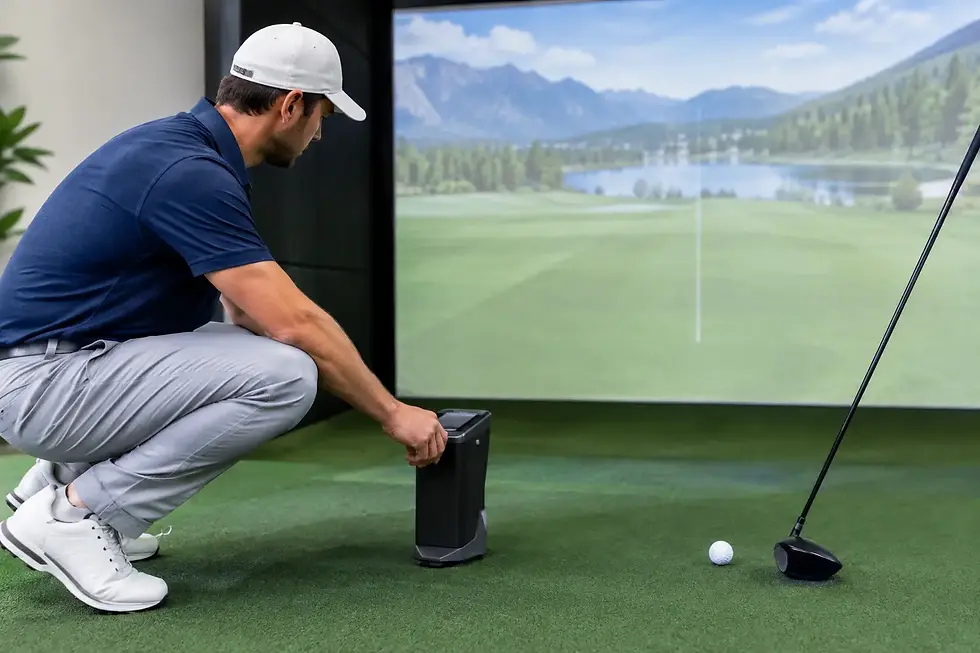
Camera-based units are often excellent for indoor environments because they capture the ball close to impact and may offer detailed club measurements. They can be ideal for rooms where depth is limited. Floor-mounted models require the player to position the unit correctly, while overhead models remove that step and make switching between right- and left-handed golfers easier.
Radar-based technology can be especially useful when you want to track a longer ball flight, but it typically benefits from adequate space behind the player and in front of the ball. In a shallow basement or garage bay, that requirement may affect performance or make another option more practical.
Ceiling height deserves equal attention. Most indoor setups benefit from at least 9 feet of clear height, while taller golfers and aggressive swings may need more. A launch monitor cannot solve a room that makes players afraid to swing freely. The best simulator experience begins with a space that feels comfortable at full speed.
Do Not Overlook Software and Ongoing Costs
Launch monitor pricing can be misleading when software is left out of the comparison. One system may include a strong practice range and basic simulation, while another requires separate software purchases or annual subscriptions to access courses, competitions, and advanced analytics.
For the golfer focused on improvement, look at the quality of the practice tools. Can you save sessions, compare clubs, review dispersion patterns, and work through targeted drills? For the family or entertainment buyer, course selection, multiplayer options, visual quality, and ease of use may matter more.
Commercial buyers should also consider licensing. A software package intended for home use may not be appropriate for a business setting. A professional configuration should account for commercial software rights, customer-friendly controls, reliable computing hardware, and support when the system needs attention.
Avoid the Cheapest-First Decision
Buying the lowest-priced monitor that claims to work indoors can create a frustrating setup if it does not deliver the data, compatibility, or durability you expected. The reverse is also true: paying for every possible metric is unnecessary if your simulator will primarily host weekend rounds with friends.
A better approach is to rank your priorities. Decide whether your first priority is skill development, realistic course play, a clean overhead installation, left- and right-handed usability, commercial durability, or keeping the complete project within a firm number. Once those priorities are clear, the right options become easier to compare.
At Green Pro Golf Simulators, the process begins with the room and the intended experience, then matches premium technology to that plan. That helps buyers avoid paying for features they will not use while protecting the parts of the build that make the simulator enjoyable for years.
The launch monitor that fits your budget is the one that leaves room for a complete, dependable simulator - and gives every player a reason to come back for the next round.


Comments