
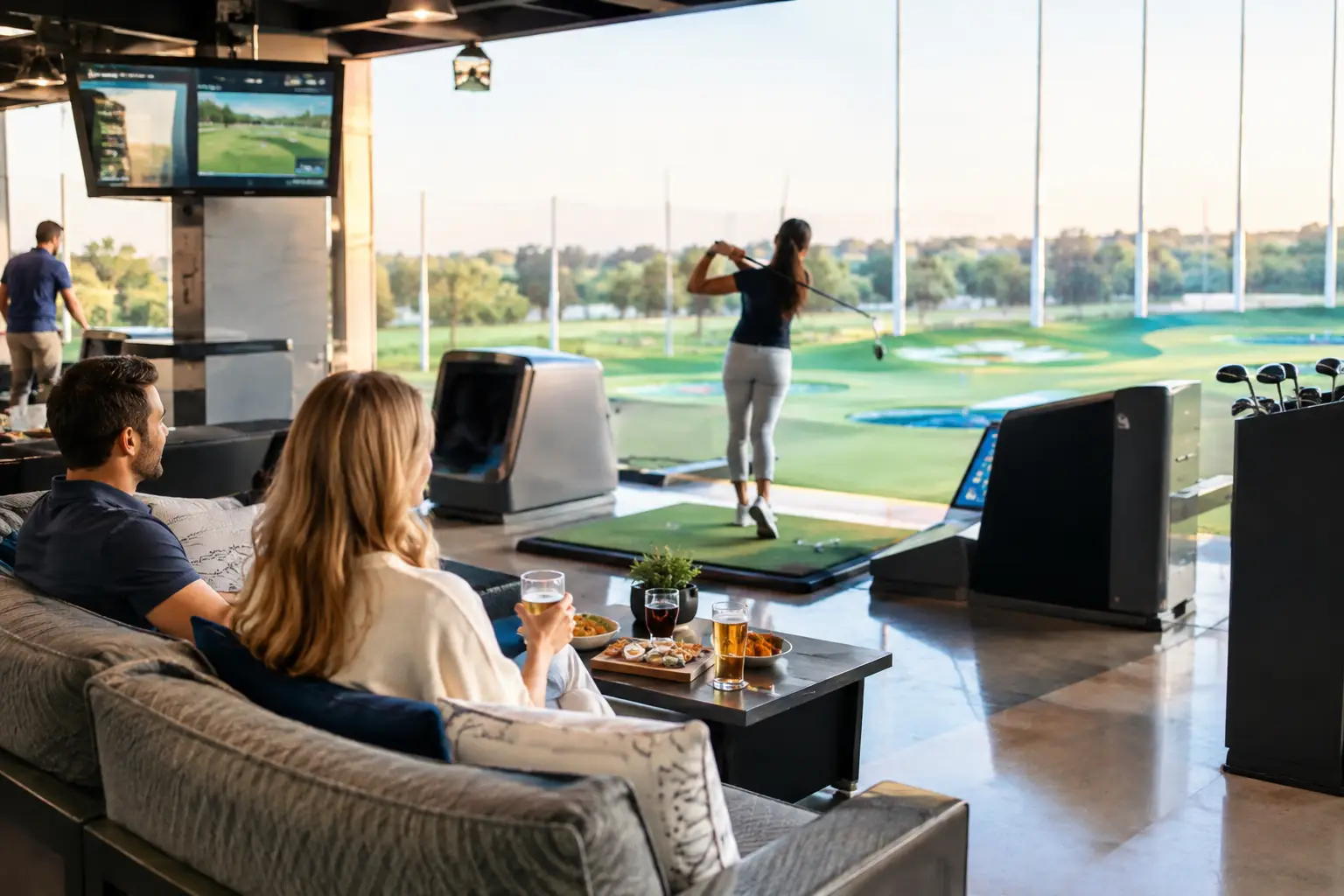
Golf Entertainment Venue Guide for Smarter Builds

A successful simulator venue is not built around a launch monitor alone. It is built around the moment a guest walks in, understands what to do, gets a turn quickly, and decides to stay for another round. This golf entertainment venue guide helps owners plan that full experience, from room layout and technology selection to staffing, revenue, and long-term reliability.
For a bar, restaurant, golf course, dedicated simulator facility, or multi-use recreation space, the best design is rarely the most expensive one on paper. It is the one that fits the building, serves the intended customer, performs consistently, and gives the operator a clear path to revenue.
Start With the Venue Model, Not the Simulator
Before choosing hardware, define why people will visit and how they will use the space. A golf course may need winter practice revenue and instruction capability. A sports bar may want a high-energy social activity that increases food and beverage spend. A 24/7 facility may prioritize easy booking, access control, and systems that can run with minimal staff involvement.
Those goals change the right equipment package, room count, operating model, and finish level. A serious practice-focused venue benefits from accurate ball and club data, realistic course play, and a clean environment for lessons and fittings. A social venue may place more value on intuitive games, multiple player formats, visible screens, and seating that lets non-golfers take part in the experience.
The strongest venues can serve both audiences, but they do not try to be everything in every bay. Designating some bays for premium practice and others for groups, leagues, and events often protects the customer experience while expanding revenue opportunities.
Golf Entertainment Venue Guide: Plan the Space First
Space planning is where many projects gain or lose value. A simulator can fit into a room that is technically large enough while still feeling cramped, dark, noisy, or awkward for guests. Ceiling height, ball flight, player clearance, viewing angles, walkways, and seating all matter before construction begins.
For most commercial bays, a ceiling height around 10 feet is a practical target, with more height providing greater comfort for taller players and full swings. Bay width and depth should allow a golfer to swing freely, accommodate right- and left-handed play where needed, and keep spectators out of the hitting area. The best dimensions depend on the launch monitor, screen type, and room layout, so this is not a place for one-size-fits-all assumptions.
Think beyond the hitting bay itself. Guests need clear access from the entrance to their bay, a place to set down drinks, sightlines to shared televisions or menu boards, and enough distance from active swings. If food and beverages are part of the model, durable finishes and thoughtfully placed tables matter as much as the projector or turf.
Acoustics deserve early attention as well. Golf shots create impact noise, conversation carries between bays, and music can overwhelm instruction or league play. Proper wall treatments, bay dividers, impact materials, and speaker placement can make a venue feel polished instead of chaotic.
Build for the Players You Expect
A venue near office buildings may host after-work groups that want fast game formats, food, and a relaxed atmosphere. A facility near several golf clubs may attract players looking for dependable off-season practice, custom club data, and competitive leagues. College communities may respond to membership plans, late hours, and group reservations.
These use cases affect how many people occupy each bay. A dedicated practice customer may use one bay alone for an hour. A birthday party, corporate event, or league night may need four to six people per bay, plus spectators. Plan seating, circulation, and booking intervals around peak demand rather than average weekday traffic.
Choose Technology for Reliability and Purpose
Premium simulator technology can deliver exceptional accuracy and entertainment value, but every platform has trade-offs. Some systems excel at detailed club and ball data. Others offer flexible installation options, strong game libraries, or a lower barrier for casual players. The right choice depends on the venue's purpose and the physical space.
For commercial use, reliability should rank alongside performance. A system that produces great data but requires frequent intervention can disrupt bookings, frustrate guests, and burden staff. Look for commercial-ready hardware, durable enclosures, quality impact screens, bright projectors, capable computers, and a network designed for simultaneous use across bays.
Do not underestimate the importance of the visual experience. A sharp, bright projected image makes course play more believable and helps a first-time guest understand where to aim. High-quality turf, clean screen tension, proper lighting, and a finished bay structure signal that the business takes the experience seriously.
A professional simulator partner can help compare systems such as Trackman, Uneekor, Foresight, and ProTeeVX against your room dimensions, customer base, and operational goals. That guidance is particularly valuable when a project includes multiple bays, custom construction, or a combination of entertainment and instruction.
Design an Experience That Works Without Constant Coaching
A first-time guest should not need a ten-minute tutorial before hitting a shot. Clear bay instructions, simple login and game selection, easy score displays, and staff who know how to reset a session quickly all reduce friction. The easier the experience feels, the more likely a group is to book again.
This is especially important for bars, restaurants, and 24/7 venues. Guests may arrive with little golf experience, but they still want to feel successful. Offer beginner-friendly games alongside full-course play, and consider a recommended game menu for groups, families, leagues, and serious golfers.
Staff training is part of the product. Employees should know basic software navigation, how to position players safely, how to explain game formats, and when to escalate a technical issue. A venue does not need every employee to be a golf professional, but guests should always feel supported.
Build the Revenue Plan Into the Layout
Hourly bay rentals are the foundation for many golf entertainment businesses, yet they should not be the only source of income. Leagues create repeat traffic during slower periods. Corporate events fill multiple bays at once. Lessons, fittings, memberships, food and beverage packages, and branded tournaments can raise revenue per visit.
Pricing should reflect the local market, the quality of the build, peak demand, and what is included. A premium private bay with high-end tracking, comfortable seating, and attentive service can support a different rate than a self-service practice station. It depends on the customer promise. Underpricing a premium experience can make it harder to fund staffing, maintenance, and future upgrades.
Use booking rules that protect revenue without making reservations difficult. Peak-hour minimums, cancellation policies, party packages, and a buffer between sessions can improve operations. The right buffer is not wasted time if it allows staff to reset the bay, clean surfaces, and welcome the next group on schedule.
Avoid the False Economy of a Cheap Build
Commercial simulator venues see more swings, more foot traffic, more spilled drinks, and more opportunities for misuse than home installations. Cutting corners on screen material, framing, flooring, wiring, ventilation, or computer hardware may reduce the initial budget, but it can create downtime when the venue needs to be open.
A better approach is to invest in the components that protect the guest experience and make service easier: commercial-grade impact surfaces, accessible equipment locations, protected cabling, proper electrical planning, and hardware selected for the expected volume. Not every project needs the same finish level, but every project needs a plan for daily use.
Treat Support and Maintenance as Operating Essentials
Technology-backed entertainment requires a support plan. Software updates, PC maintenance, projector alignment, screen wear, calibration checks, and network performance should be addressed before they become a customer-facing issue. Keep simple troubleshooting instructions on site, maintain spare accessories where practical, and establish who is responsible when a bay needs attention.
For multi-bay venues, centralized equipment planning can save significant time. Organized racks, labeled cables, remote access where appropriate, and consistent configurations across bays make troubleshooting faster and reduce confusion for staff.
The right installation partner stays focused on the venue after opening day. Green Pro Golf Simulators approaches commercial builds as complete operating environments, helping owners align premium technology, room design, installation details, and ongoing support with the way the business actually plans to serve guests.
A well-planned venue gives serious golfers a reason to practice all year, gives groups a reason to gather, and gives operators more ways to create repeat business. Start with the customer experience you want people to remember, then build every bay to deliver it reliably.


Comments