
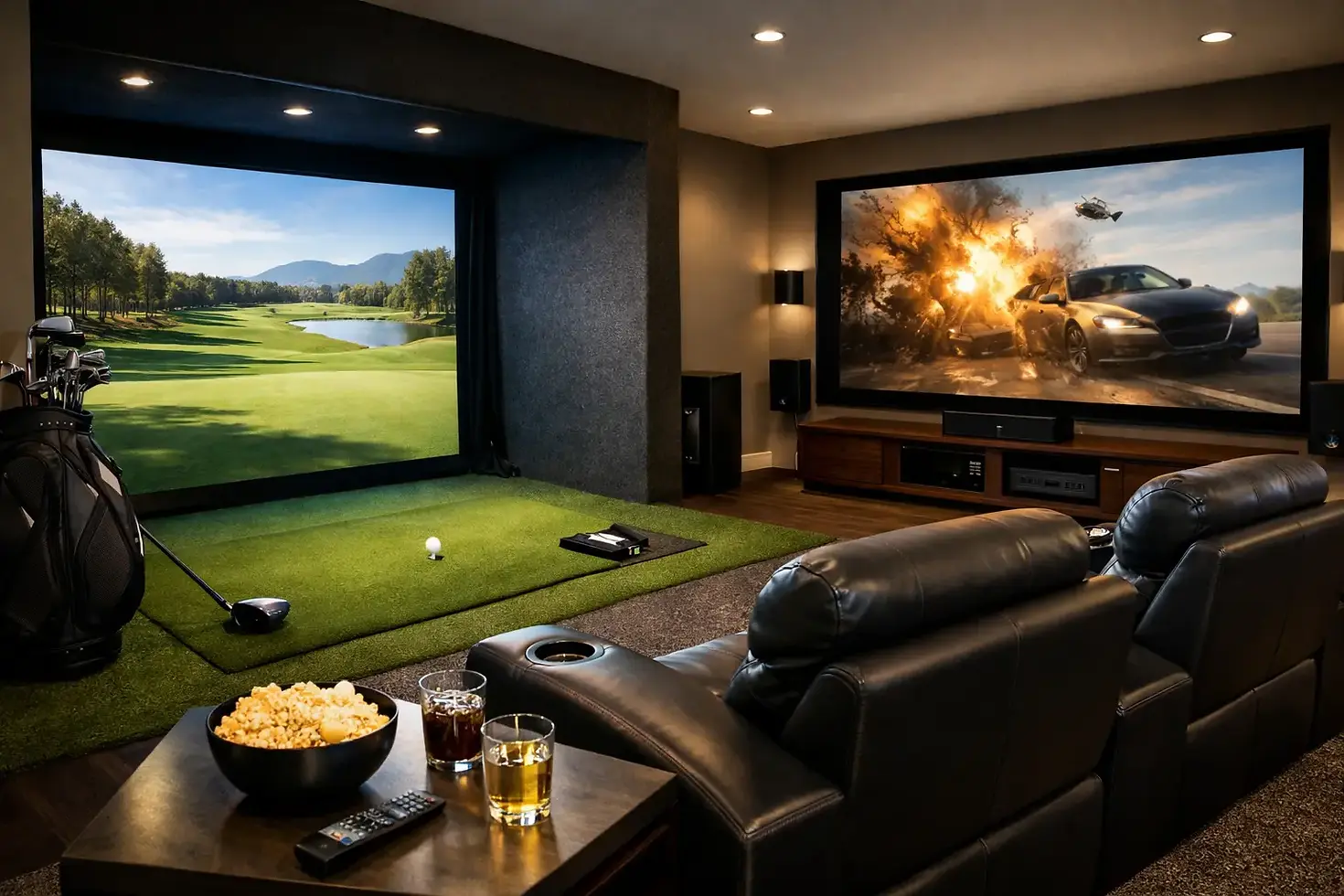
Golf Simulator With Home Theater Ideas

A room that can handle a Saturday foursome and movie night sounds ambitious until you see how often the two uses actually complement each other. A well-designed golf simulator with home theater features can turn a basement, bonus room, or garage into the most used space in the house. The key is not cramming two systems into one room. It is designing one environment that performs well for both.
For homeowners, that usually means balancing ball flight, image quality, sound, seating, and safety without wasting square footage or budget. For commercial spaces, it means creating an experience that keeps people engaged longer and gives the room value beyond golf alone. In both cases, the best results come from planning the room around how it will really be used.
Why a golf simulator with home theater makes sense
Most buyers are not choosing between golf and entertainment. They want both. A simulator room that only gets used for practice may sit idle for days at a time, especially in households where not everyone plays golf. Add strong theater capability and the room becomes useful for sports, movies, gaming, and social events.
That wider use changes the value equation. A premium simulator becomes easier to justify when it serves serious practice and family entertainment. It also changes how the room should be designed. Ceiling height, projector placement, screen material, audio layout, and lighting control all matter more when the room has two jobs instead of one.
This is also where experienced design matters. A room that looks great on paper can fall short quickly if the projector throws shadows during play, the impact screen washes out movie content, or the seating interferes with swings. The details decide whether the room feels polished or compromised.
Start with the room, not the equipment
The smartest way to approach a dual-purpose build is to evaluate the space before choosing brands or specs. Dimensions drive almost every decision. Room width affects swing comfort for right- and left-handed players. Ceiling height affects confidence at address. Room depth influences projector choice, hitting position, and whether you can fit seating without crowding the golfer.
Basements are often ideal because they support a dedicated entertainment environment with controlled lighting and acoustics. Garages can work very well too, especially for golf-first buyers who want theater capability as a bonus. Bonus rooms and flex spaces can be excellent candidates if ceiling height is available and the room can be darkened effectively.
There is no universal perfect size, but there is a clear difference between a room that technically fits a simulator and a room that feels comfortable to use. That distinction matters. If the golfer feels constrained, or guests feel like they are sitting inside a practice bay, the room will never reach its potential.
The biggest design decisions for a golf simulator with home theater
The impact screen is one of the most important choices because it serves as both golf target and theater display. For golf, it needs durability, ball speed tolerance, and a surface that reduces bounce back. For movies and sports, it needs to present a clean image with solid brightness and acceptable texture. Some screens lean more toward simulator performance, while others deliver a more refined theater picture. The right answer depends on whether golf or viewing quality is the higher priority.
Projector selection matters just as much. A simulator projector needs to fit the room layout, stay protected from club and ball paths, and still produce a bright, sharp image. In dual-use rooms, resolution and aspect ratio deserve extra attention. A setup that looks fine for range practice may feel underwhelming during a movie if the image lacks clarity or scale.
Audio is where many mixed-use rooms come up short. Golfers often focus heavily on launch monitor data, turf, and enclosure design, then treat sound as an afterthought. That is a mistake if theater use is important. Clean speaker placement, subwoofer integration, and acoustic treatment can make the room feel complete. Without them, even a high-end visual setup can feel flat.
Lighting also deserves more credit than it gets. Golf simulator spaces need enough usable light for setup, socializing, and safe movement, but they also benefit from controlled darkness for projection quality. Layered lighting solves this well. Recessed fixtures, dimmers, accent lighting, and task-specific zones let the room switch from practice mode to theater mode without feeling awkward.
Golf-first, theater-first, or truly balanced
Every project has a priority, and being honest about that early makes the build better. A golf-first room usually favors larger hitting zones, stronger enclosure protection, commercial-grade components, and practical flooring. Theater quality still matters, but the space is optimized around playability and durability.
A theater-first room puts more weight on seating comfort, audio performance, image refinement, and room aesthetics. Golf is still part of the experience, but the system may involve more compromises on hitting position or player capacity.
A balanced room is often the sweet spot for residential buyers. It gives the golfer a legitimate practice setup while delivering a polished entertainment experience for the rest of the household. That balance is easier to achieve when the system is custom-configured instead of assembled from generic packages.
Seating, safety, and traffic flow
This is where real-world experience pays off. The room has to work when someone is swinging a driver and when six people are watching a game. Seating cannot block the hitting area, interfere with tracking technology, or place guests in the path of a ricochet.
In many rooms, the best approach is flexible seating rather than permanent front-row theater chairs. Sectionals, rear loungers, bar-style seating, or movable stools often create a better dual-purpose layout. The goal is to keep sightlines clean while preserving a safe buffer around the golfer.
Flooring choices matter too. You want stable hitting and stance surfaces, but you also want comfort and a finished look. The right blend of simulator turf, walkable flooring, and clean transitions helps the room feel intentional instead of pieced together.
Technology choices should match how you use the room
Not every launch monitor, computer, projector, or display setup is equally suited to a combined simulator and theater environment. Some buyers care most about club data and serious practice. Others want a strong entertainment system that also supports casual rounds with friends. Commercial buyers may need equipment that can handle heavier traffic and a wider range of users.
That is why brand selection should follow goals, not the other way around. Premium systems from names like Trackman, Uneekor, Foresight, and ProTeeVX each bring different strengths. The same is true for projection, display, and computing hardware. A custom plan helps avoid overspending in one area while overlooking another that affects the overall experience more.
This is also where working with a full-service partner matters. The room has too many connected variables for guesswork. Green Pro Golf Simulators approaches these projects by looking at the full environment, usage goals, and budget together, then building a system that makes sense as a whole rather than selling isolated components.
Budgeting for the full experience
A golf simulator with home theater can range from a strong mid-tier family setup to a true premium showpiece. Budget is not only about launch monitor price. It includes enclosure quality, projector performance, audio, screen selection, flooring, room finishing, installation, and support.
The mistake many buyers make is spending heavily on one headline item while underfunding the elements that affect daily enjoyment. A high-end launch monitor in a poorly lit, echo-filled room with weak projection will not feel premium. On the other hand, a thoughtfully balanced system often delivers a better overall result than a top-spec component list assembled without a plan.
A smart budget starts with priorities. If your goal is year-round game improvement with occasional movie nights, your allocation will look different from someone creating the main entertainment room for the house. Neither approach is wrong. The room just needs to reflect what success looks like for you.
Who benefits most from this kind of room
Homeowners who play regularly get the obvious advantage of convenient practice, but the bigger win is often how often the space gets used by everyone else. Families, sports fans, and frequent hosts tend to get the most out of a combined room because the system never feels single-purpose.
Commercial venues can benefit even more. Bars, restaurants, and 24/7 simulator facilities can use theater functionality to expand events, increase dwell time, and create more reasons for customers to return. In those cases, the room is not just an amenity. It is part of the revenue strategy.
A room worth using all year
The best dual-purpose simulator rooms do not feel like a compromise. They feel like a smart, well-built space that happens to do two things extremely well. When the layout is right, the technology is matched to the room, and the design reflects how people actually use the space, a golf simulator room becomes more than a practice area. It becomes the place everyone wants to spend time.
If you are considering one, start by thinking less about packaged products and more about the experience you want the room to deliver. That is usually the difference between a room that impresses on day one and one that still gets used constantly years later.


Comments