

Home Simulator Basement Transformation Done Right

A basement can be the most practical place in the home to build a serious golf space - but only when the room is planned around the golfer, the swing, and the technology. A successful home simulator basement transformation is not simply a launch monitor, screen, and projector placed in an open corner. It is a purpose-built environment where room dimensions, ball flight, lighting, flooring, sound, and equipment placement all work together.
For homeowners who want dependable year-round practice and a room the whole family will enjoy, the basement offers real advantages. It is protected from weather, naturally separated from the main living area, and often large enough to become a dedicated recreation space. The key is evaluating what the room can support before choosing a simulator package.
Start With the Room, Not the Equipment
The first question is not which launch monitor you want. It is whether the basement can safely and comfortably accommodate a full swing. Ceiling height matters most. Many golfers can make a comfortable swing with 9-foot ceilings, while taller players or players with a more upright swing may need 10 feet or more. A room that looks generous on paper can still feel restrictive once a golfer takes a driver back.
Room width and depth also shape the design. A centered hitting position gives both right- and left-handed players a better experience, although some rooms are best configured for one dominant handedness. Depth determines the safe distance from ball to screen and from the golfer to the ball, while also allowing enough room for cameras, radar-based tracking, seating, and traffic flow.
Before a build begins, test the actual swing area. Stand where the ball would be, take full practice swings with every club, and account for soffits, ductwork, support posts, light fixtures, and low-hanging pipes. A professional site review can identify solutions such as a side-offset layout, a different hitting orientation, or equipment that better fits a challenging space. The right configuration is often possible, but it should be based on real measurements rather than assumptions.
Design a Home Simulator Basement Transformation Around Use
A basement simulator can be a dedicated practice studio, a family entertainment room, or both. The intended use determines where the budget should go.
A golfer focused on improving swing data may prioritize a premium launch monitor, a precise hitting mat, and a clean hitting bay with minimal distractions. A homeowner building a multipurpose recreation room may place more value on a larger impact screen, high-quality projector, surround sound, comfortable seating, and a setup that can switch easily between golf, movies, and games.
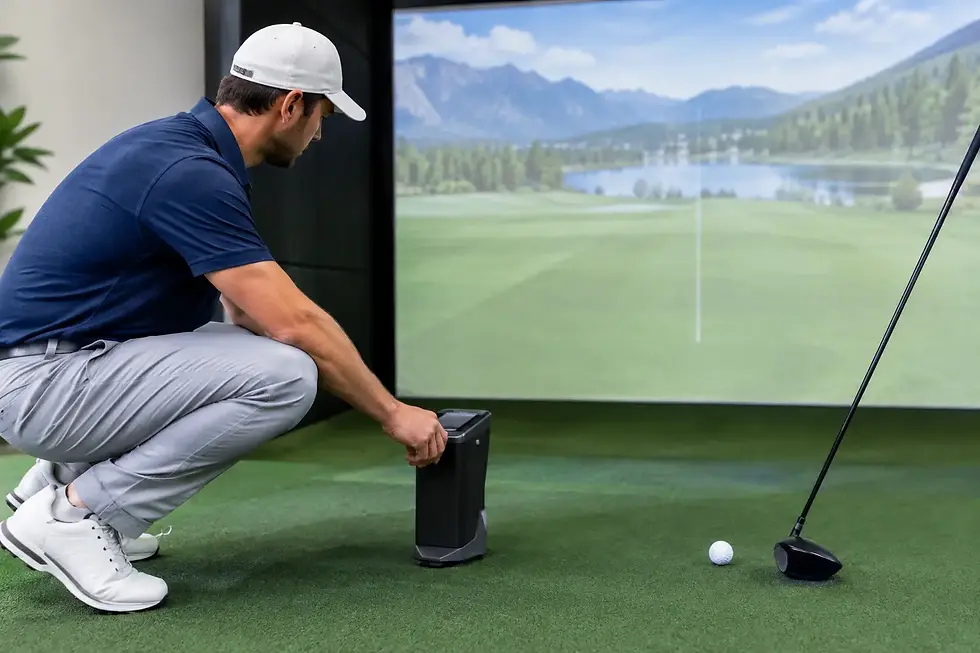
There is no universal best package. Camera-based systems can be an excellent choice in tighter rooms and provide detailed club and ball data. Radar-based systems may require more ball-flight space behind the player, but can be an outstanding fit in deeper rooms. Overhead units keep the floor clear and support right- and left-handed play without moving the hardware. Floor-mounted systems can offer strong value and performance when the room and hitting position are fixed.
This is where a custom design process pays off. Technology should fit the basement, the golfer, and the household's goals - not force the homeowner to adapt to a generic package.
Build the Hitting Bay for Safety and Confidence
The hitting bay is the part of the room that absorbs the most abuse and creates the strongest first impression. It needs to be built for repeated full-speed shots, not occasional use.
A quality impact screen should provide a realistic image while handling ball speed safely. The enclosure, side protection, ceiling baffles, and rear wall treatment should contain errant shots without making the room feel closed in. If the screen is too close to hard surfaces or the side protection is undersized, one mishit can damage drywall, equipment, or something more valuable.
Flooring deserves the same attention. A proper hitting mat should allow the club to move through impact more naturally than thin, hard turf. It should also be stable enough that it does not shift over time. Many basement designs combine a durable turf surface in the bay with carpet or resilient flooring in lounge areas. That separation keeps the room polished while making maintenance easier.
Consider the transition from the simulator to the rest of the basement. Steps, low bulkheads, exposed utility areas, and narrow walkways can become problems once people gather to watch. A good layout leaves a clear path to seating, storage, and exits without crossing directly behind the hitter.
Control Light, Sound, and Climate
Basements often have less natural light, which can be an advantage for projector performance. Still, light control is more than turning off a few overhead fixtures. Bright lights near the screen can wash out the image, while lighting directly above the hitting area can interfere with some tracking systems or create shadows that make the room less comfortable.
Use dimmable, well-positioned lighting to separate practice mode from entertainment mode. Focused task lighting near seating, a bar area, or equipment storage can keep the room functional without compromising the projected image. The result should feel intentional, not like a dark room with a screen at one end.
Sound control is equally important in a finished basement. Driver impact, ball contact, and screen noise can travel through framing and floors. Acoustic panels, insulation, carpeted surfaces, and thoughtful enclosure materials can reduce echo and help limit disturbance elsewhere in the home. The amount of sound treatment depends on the house and who uses the rooms above, but it is far easier to address during construction than after the simulator is installed.
Climate and moisture should be checked early as well. Basements need reliable humidity control, particularly in regions with humid summers or substantial seasonal temperature swings. Premium electronics, projectors, and computers perform best in a stable, clean environment. If the basement has a history of moisture issues, solve that first. A beautiful simulator room is not a substitute for proper basement preparation.
Choose Equipment That Will Still Serve You Later
A simulator system should feel useful after the excitement of installation wears off. That means choosing technology based on accuracy, ease of use, software preferences, available support, and how the system will be used week after week.
For serious practice, dependable ball and club data matter. For casual play, course libraries, multiplayer options, and a simple startup process may matter just as much. The computer, projector, and display settings are also part of the experience. A premium launch monitor cannot overcome a poorly matched projector or a computer that struggles to run simulation software smoothly.
Avoid buying each component in isolation. A launch monitor, enclosure, hitting surface, projector, computer, and mounting solution are a system. Compatibility, cable management, image alignment, and software configuration all affect the finished result. Professional installation reduces the frustration of trying to troubleshoot multiple premium components after the fact.
Green Pro Golf Simulators approaches basement projects as complete custom systems, pairing proven technology with the space, budget, and performance expectations of each homeowner. That hands-on planning helps prevent common compromises, such as a projector mounted in the wrong location or a hitting bay that is too small for confident use.
Plan for More Than Golf
The strongest basement simulator rooms earn their space even when nobody is hitting balls. With the right screen, projector, audio, and seating, the room can host a game day, movie night, family gathering, or a friendly closest-to-the-pin contest. This broader value is often what turns a simulator from a personal purchase into a favorite room in the house.
That does not mean every basement needs a full theater or bar. In a compact room, a simple bench, equipment cabinet, and clean viewing area may be exactly right. In a larger basement, a lounge zone behind the hitting area can create a more social setting. The best choice depends on whether the room is primarily for focused training or shared entertainment.
Storage should be part of the plan, too. Golf bags, clubs, spare balls, remotes, keyboards, and cleaning supplies need a home. Built-in cabinetry or discreet wall storage keeps the room organized and protects expensive equipment from accidental damage.
Get the Details Right Before Construction Starts
A basement transformation can involve framing, electrical work, flooring, low-voltage wiring, HVAC adjustments, lighting, and finish carpentry. Coordinating those pieces before construction avoids costly rework. For example, power and data locations should be planned around the final equipment layout, not added after walls are closed.
Ask for a clear design that shows hitting position, screen size, projector placement, launch monitor location, protection requirements, and seating zones. Confirm who will handle installation, calibration, and support after the room is complete. Premium equipment deserves a premium setup process.
The best basement simulator is the one you look forward to using on a cold Tuesday night, not just showing off when guests visit. Start with honest room measurements, build around the way you play, and make every design decision support a space that feels ready whenever you are.


Comments